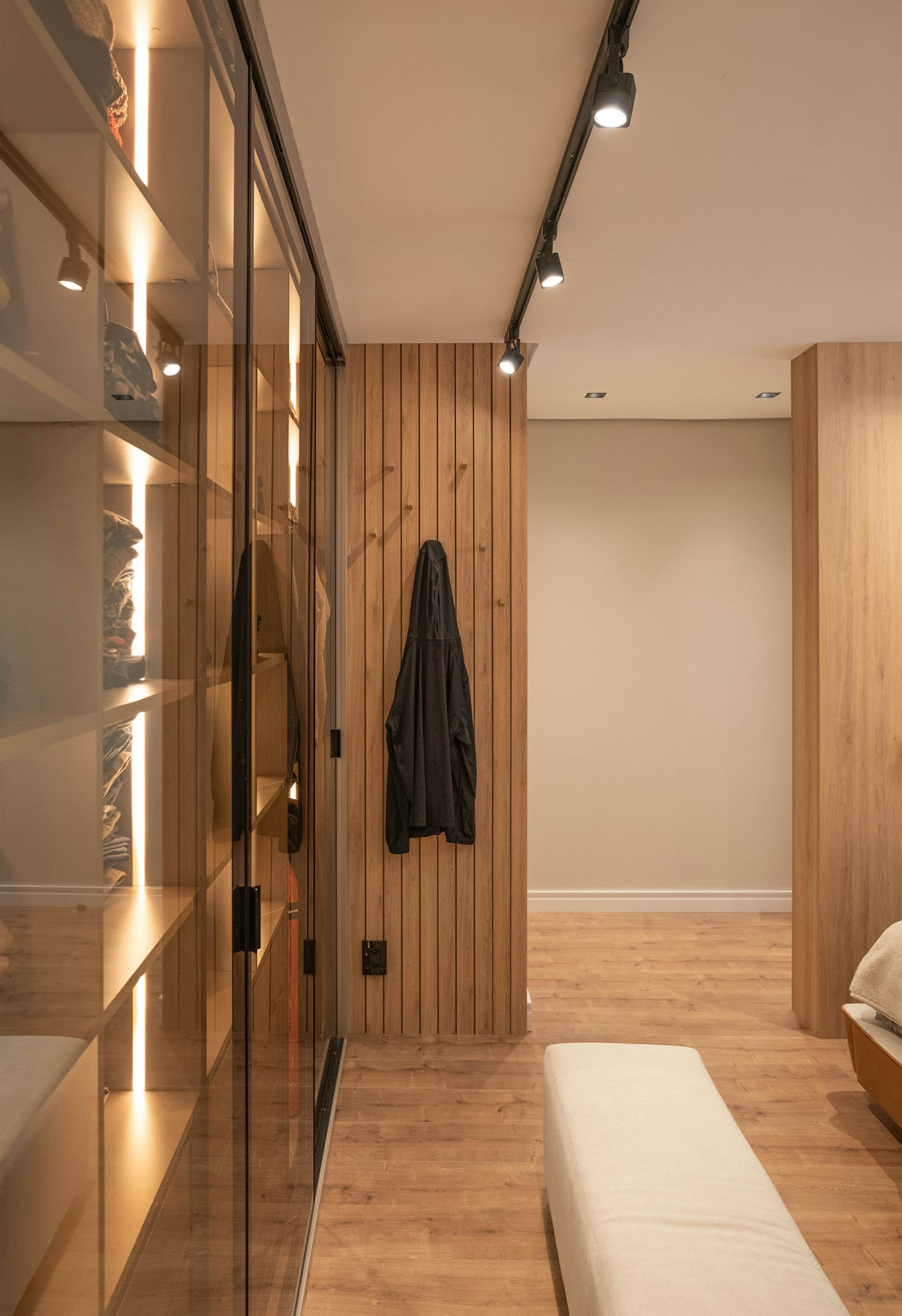
Inspect the actual light-source construction
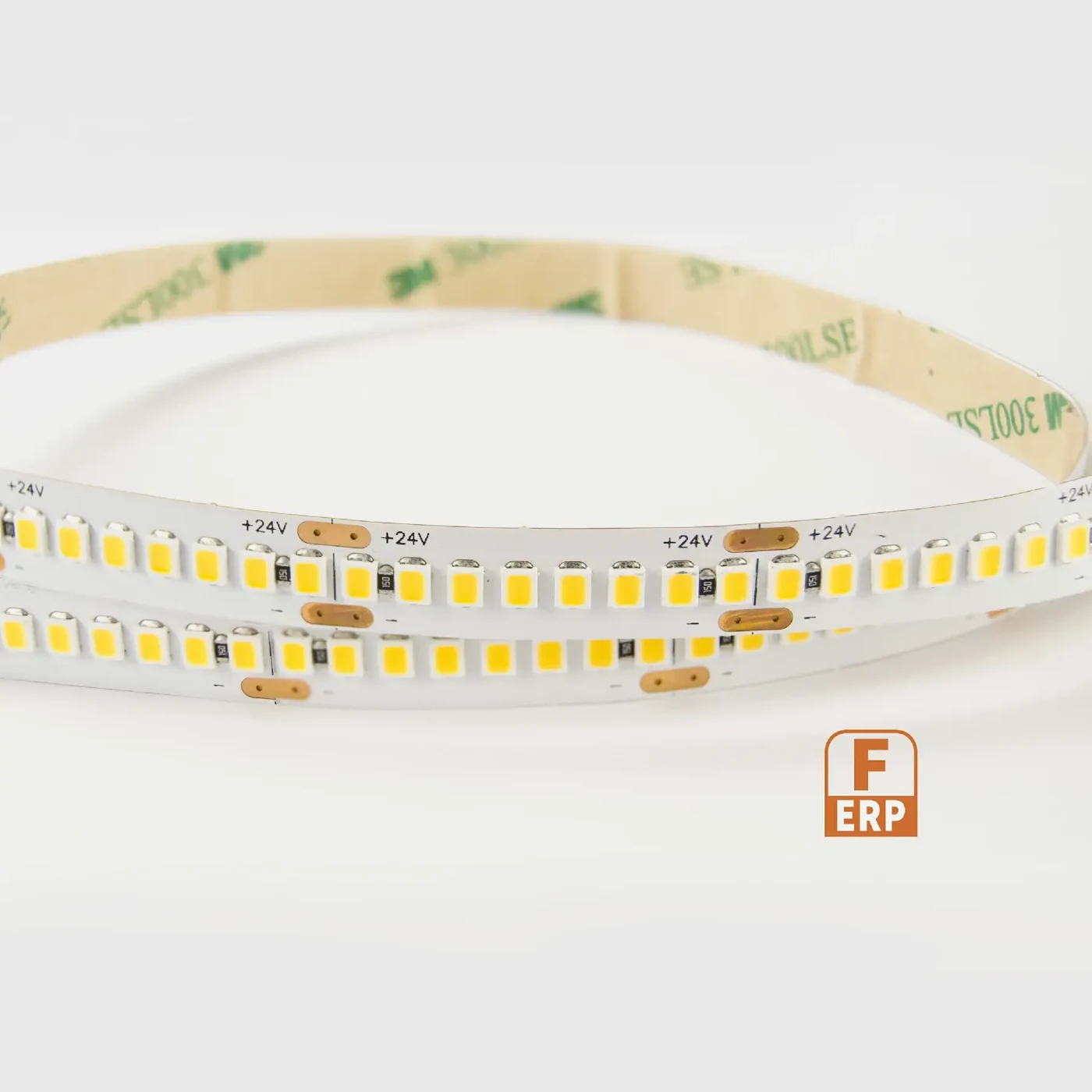
A close view of an LED strip helps distinguish the board, packages and electrical sections. Use the selected model drawing for its dimensions and cutting interval.

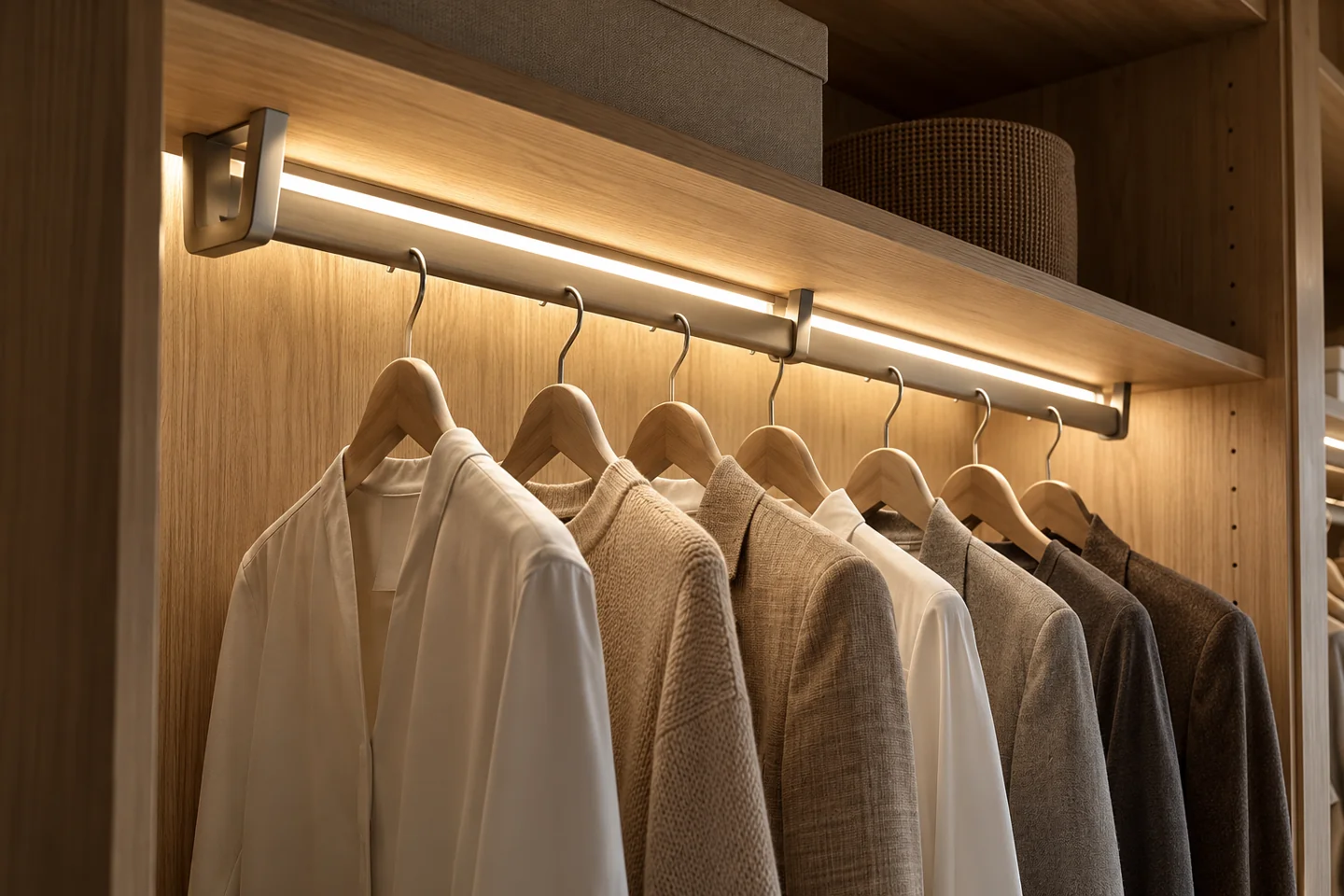
Resolve the structural support and light assembly as one detail; a glowing rail is also part of a loaded furniture component.
Discuss this assemblyResolve the structural support and light assembly as one detail; a glowing rail is also part of a loaded furniture component.
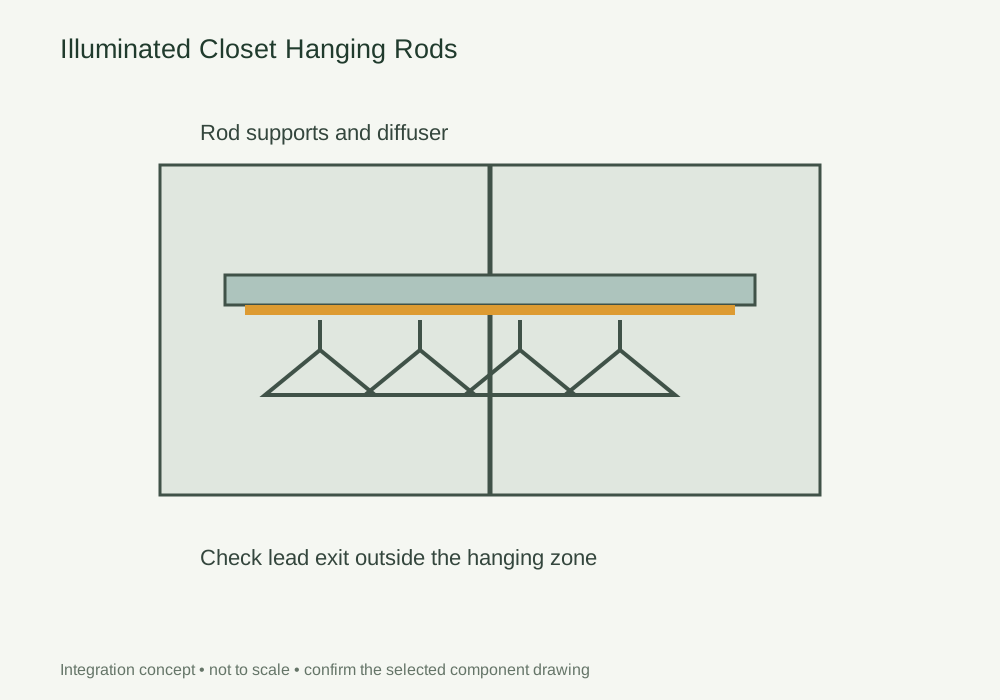
Specify rail lengths, support positions and the mechanical load basis. Show the panel cable exit and the fittings that remain removable for service.
Coordinate the rail, light section, supports and diffuser. Allow for end fittings and lead termination when agreeing cut lengths; structural and electrical checks need separate criteria.
Review the rail with representative garments and the agreed support arrangement. Check source visibility, diffuser retention and lead relief, then retain the approved mechanical and optical details.
DESIGN DECISIONS
A hanging rod carries garments as well as a light source. Its support spacing, end fittings and cable exit must be resolved with the wardrobe design. A slim appearance does not demonstrate its load capacity. Review the illuminated section and the mechanical support arrangement as separate parts of the approval.
| Decision | Required input | Review with the sample |
|---|---|---|
| Rail support | Span, garment load basis and fixing material | Confirm the support arrangement for each rail size |
| Light section | Diffuser position and visible sightlines | Check glare above garments and near the wardrobe entrance |
| End fittings | Cable exit and removable hardware | Include end allowances in the cut-length schedule |
Use this concept to mark mounting positions, cable paths and service clearances on your fixture drawing. Dimensions and component references belong on the project drawing before machining.
Photographs support the adjacent selection decisions. The exact delivered components and their performance need their own drawings, documents and sample review.
A close view of an LED strip helps distinguish the board, packages and electrical sections. Use the selected model drawing for its dimensions and cutting interval.
Use these selection questions in the assembly brief. Confirm availability, compatibility and performance for the proposed configuration.
Confirm rail support, load requirement, diffuser retention and cable exit.
Specify each finished length, end treatment and section label.
Show how the lead passes through the panel and remains accessible.
Compare the source with the fixture dimensions and intended light effect. A complete supply schedule also identifies the profile, controls, connectors and the work included in the assembly.
This detail includes components beyond an LED strip. The catalogue does not identify a complete, approved kit for this arrangement. Send the fixture section and required operation so the source, control and mechanical interfaces can be reviewed together.
Compare catalogue light sources → Review the wider furniture system →
Discuss components for this detailState the quantity basis and open decisions. A labelled assembly schedule keeps design, purchasing and installation working from the same reference.
FREQUENTLY ASKED QUESTIONS
Practical answers for the furniture drawing, sample review and purchasing brief.
Ask a project question →Do not assume so. Compare the supports, panel fixings, available span and mechanical documentation before substituting an illuminated assembly.
Use the finished assembly length and state whether it includes end caps and supports. The light section, extrusion and complete rail may require different cut lengths.
Coordinate the feed with the end supports, fixing space and replacement route. Keep wiring clear of the load path. Confirm how the rod can be removed and disconnected without damaging finished panels.
Include Drawing revision and finished dimensions, Module quantity and order basis, Source, profile and control references. Add quantities by furniture module and identify the configuration or sample already selected. This gives the drawing review a defined scope before pricing and assembly approval.
CONTINUE THE SPECIFICATION
Use the wider furniture brief to coordinate this lighting detail with adjacent modules and project teams.
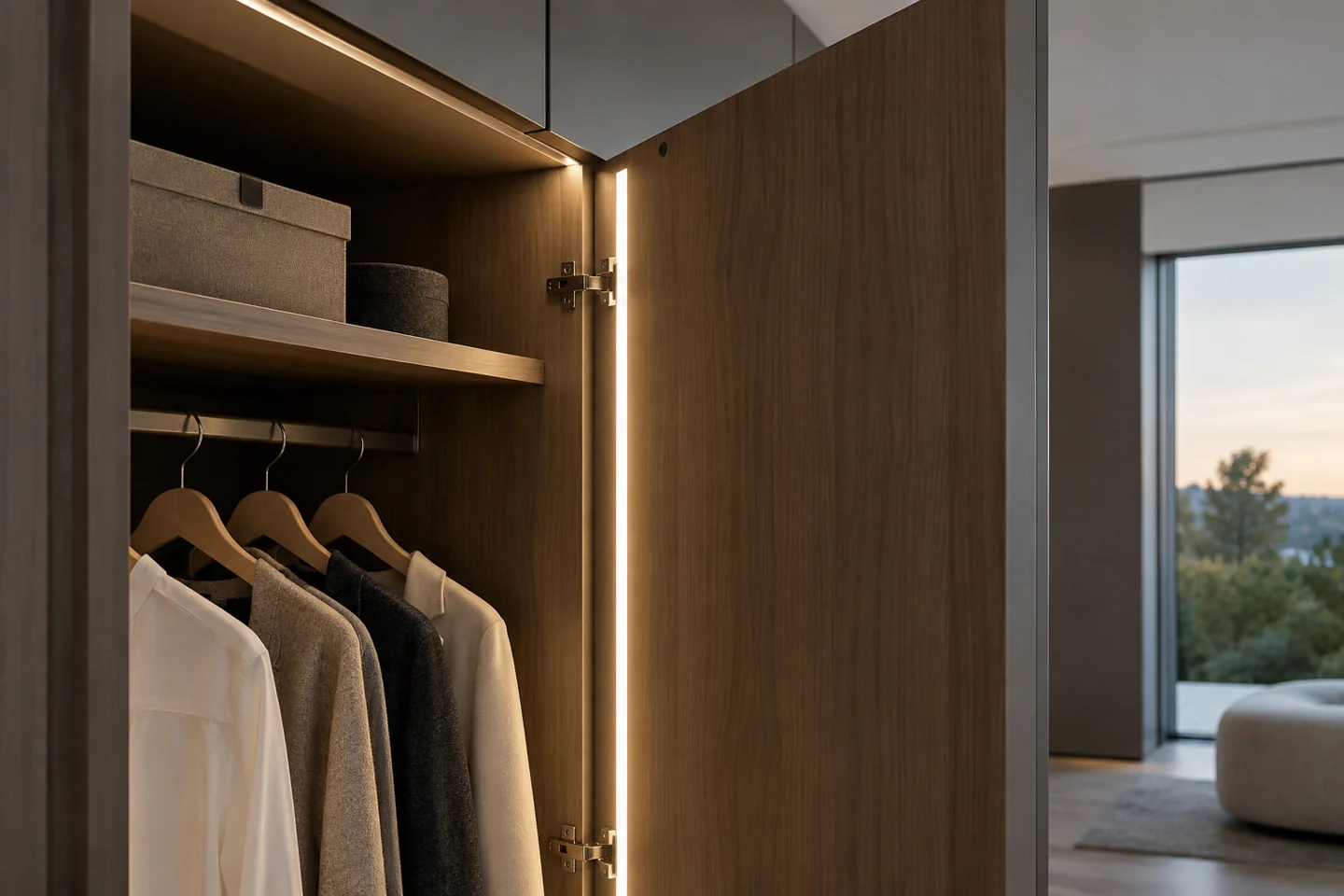
Define the switching logic before wiring the range. Door movement and body detection require different sensing layouts.
View the solution →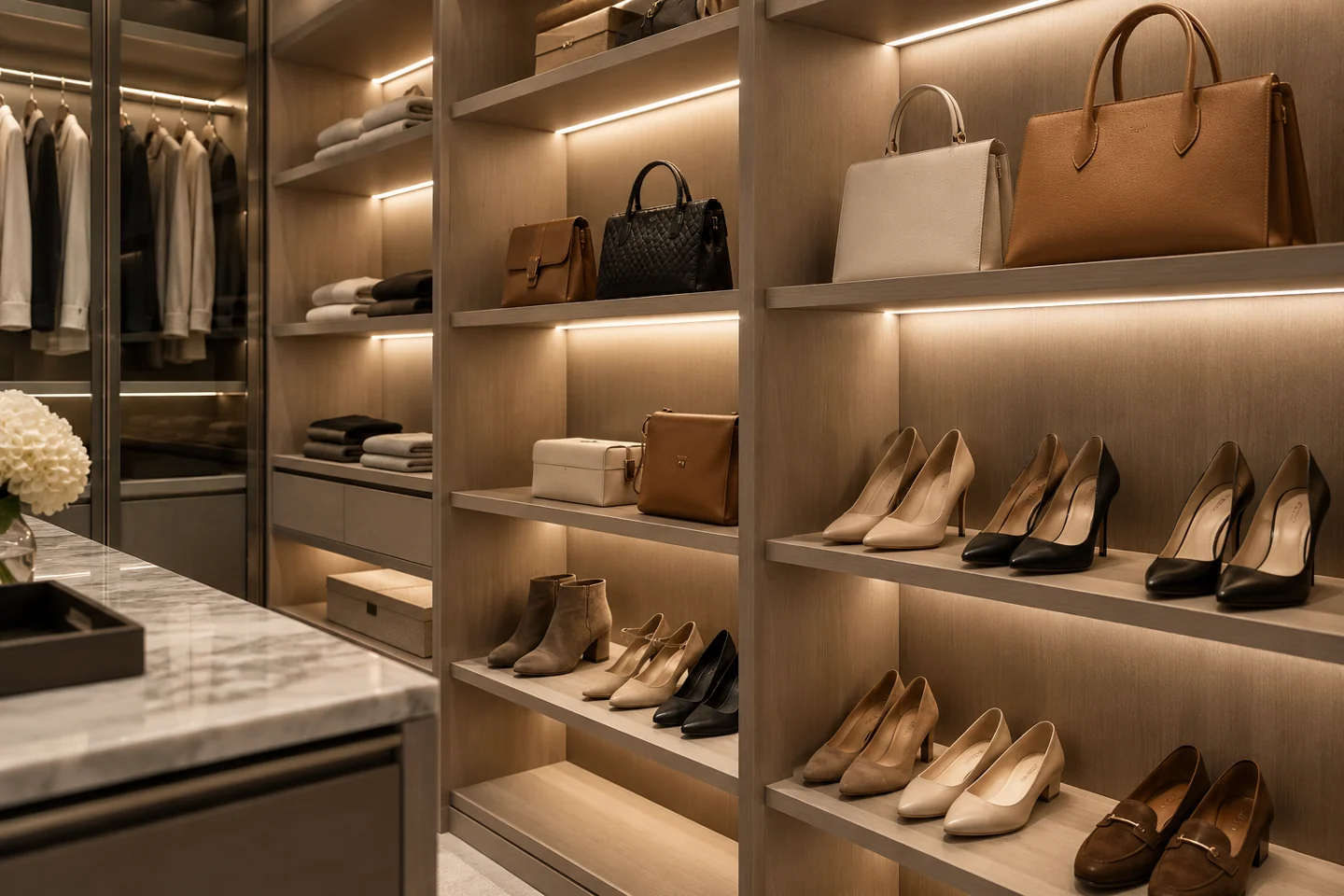
Assess clothes, shoes and bag materials under the intended viewing conditions, with the chosen driver and control.
View the solution →