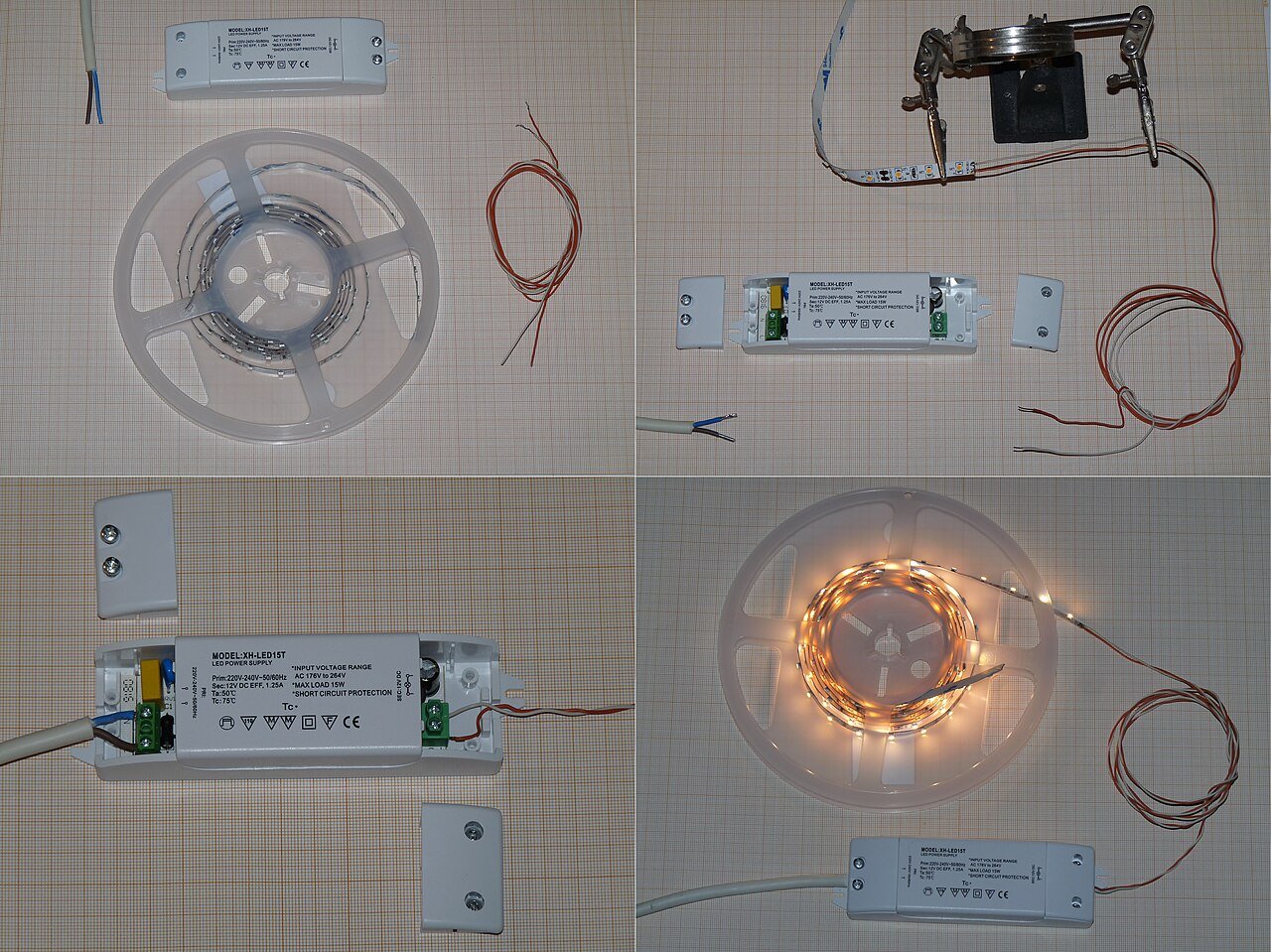
Cable exits and replaceable connections
Identify the cable exit, termination space and route back to the supply. Keep each joint reachable for inspection and replacement, and use the selected connector drawing to check the mating parts.


Coordinate shelf movement with the power interface. An apparently cable-free shelf still needs an identified electrical path.
Discuss this assemblyCoordinate shelf movement with the power interface. An apparently cable-free shelf still needs an identified electrical path.
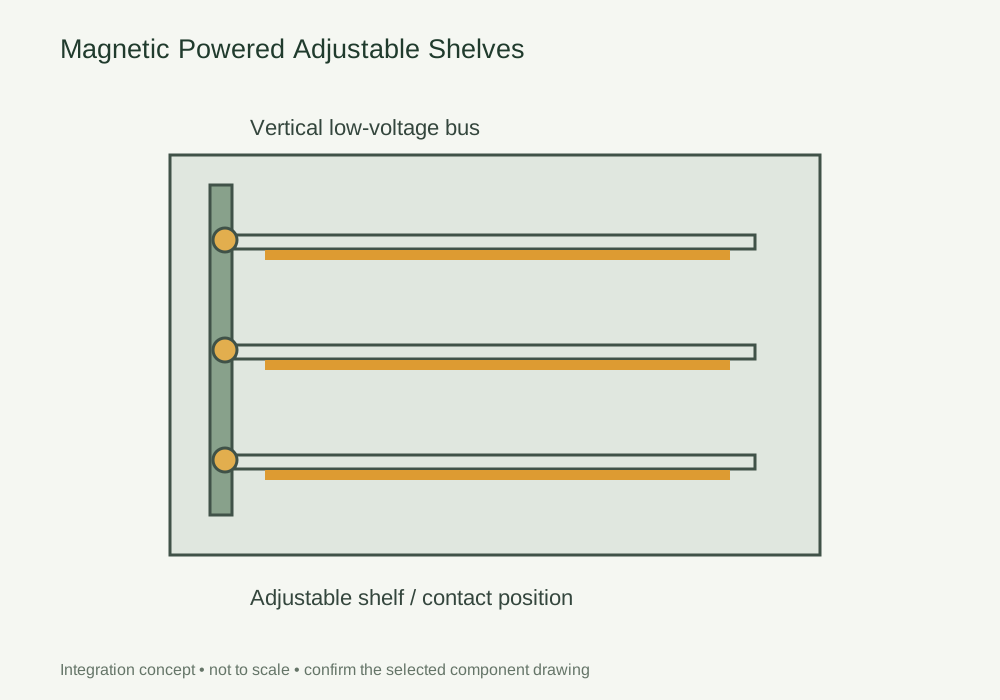
Show shelf positions, supports, track alignment and load. Clarify whether the proposed interface uses conductive contacts or contactless power; these are different systems.
Confirm track and shelf contacts as one documented interface. Check polarity, retention and electrical loading instead of inferring compatibility from a magnetic fixing method.
Move the shelf through its intended positions and inspect alignment and operation. Agree cleaning and inspection of contact surfaces before including the assembly in a repeat range.
DESIGN DECISIONS
Magnetic retention and wireless power are not interchangeable descriptions. Some shelf systems use concealed conductive tracks and contacts; others use different power-transfer methods. Identify the proposed technology and compatible components before setting shelf-hole positions or promising free adjustment throughout the cabinet.
| Decision | Required input | Review with the sample |
|---|---|---|
| Power interface | Track and contact part references | Document polarity, contact alignment and permitted loading |
| Shelf adjustment | Usable shelf positions and support detail | Check that every intended position maintains the correct interface |
| Maintenance | Cleaning access and contact surfaces | Agree the inspection and replacement method |
Use this concept to mark mounting positions, cable paths and service clearances on your fixture drawing. Dimensions and component references belong on the project drawing before machining.
Photographs support the adjacent selection decisions. The exact delivered components and their performance need their own drawings, documents and sample review.
Identify the cable exit, termination space and route back to the supply. Keep each joint reachable for inspection and replacement, and use the selected connector drawing to check the mating parts.
Use these selection questions in the assembly brief. Confirm availability, compatibility and performance for the proposed configuration.
Review contact alignment, polarity, load and retention through shelf adjustment.
Clarify whether this means concealed conductive contacts or contactless power; they are different systems.
Show the concealed feed and accessible termination points on the joinery drawing.
Compare the source with the fixture dimensions and intended light effect. A complete supply schedule also identifies the profile, controls, connectors and the work included in the assembly.
This detail includes components beyond an LED strip. The catalogue does not identify a complete, approved kit for this arrangement. Send the fixture section and required operation so the source, control and mechanical interfaces can be reviewed together.
Compare catalogue light sources → Review the wider furniture system →
Discuss components for this detailState the quantity basis and open decisions. A labelled assembly schedule keeps design, purchasing and installation working from the same reference.
FREQUENTLY ASKED QUESTIONS
Practical answers for the furniture drawing, sample review and purchasing brief.
Ask a project question →No. A magnetic fixing can hold a conductive contact in position. Ask for the actual electrical interface and its documented limits.
Sometimes, but the available routing, supports and track alignment must be checked. Review a representative cabinet section before planning a full range conversion.
Follow the selected power interface instructions. Define whether adjustment requires isolation and how contacts are protected. Document the allowed positions and the electrical load of each shelf before approval.
Include Drawing revision and finished dimensions, Module quantity and order basis, Source, profile and control references. Add quantities by furniture module and identify the configuration or sample already selected. This gives the drawing review a defined scope before pricing and assembly approval.
CONTINUE THE SPECIFICATION
Use the wider furniture brief to coordinate this lighting detail with adjacent modules and project teams.