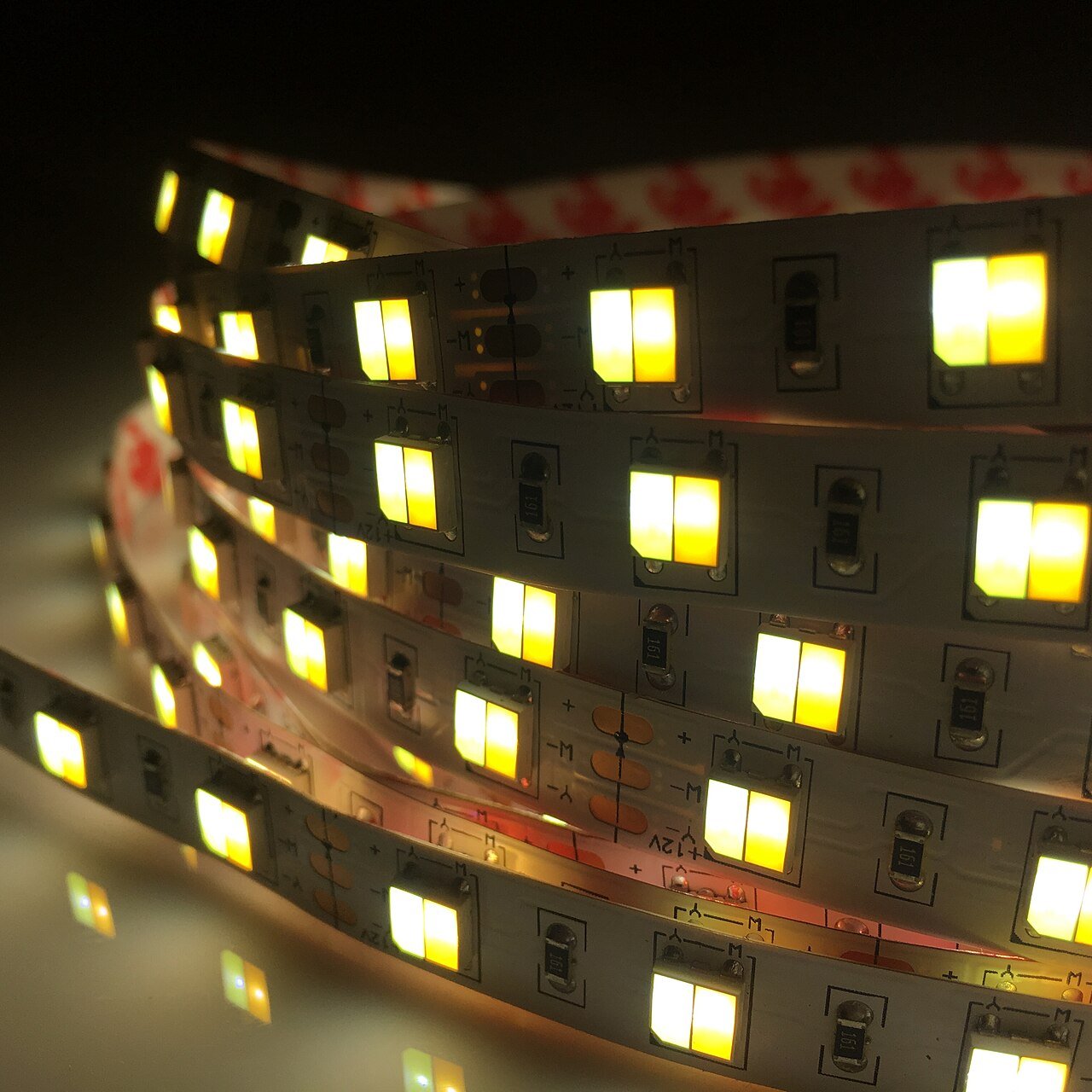
Two white-light channels on one strip
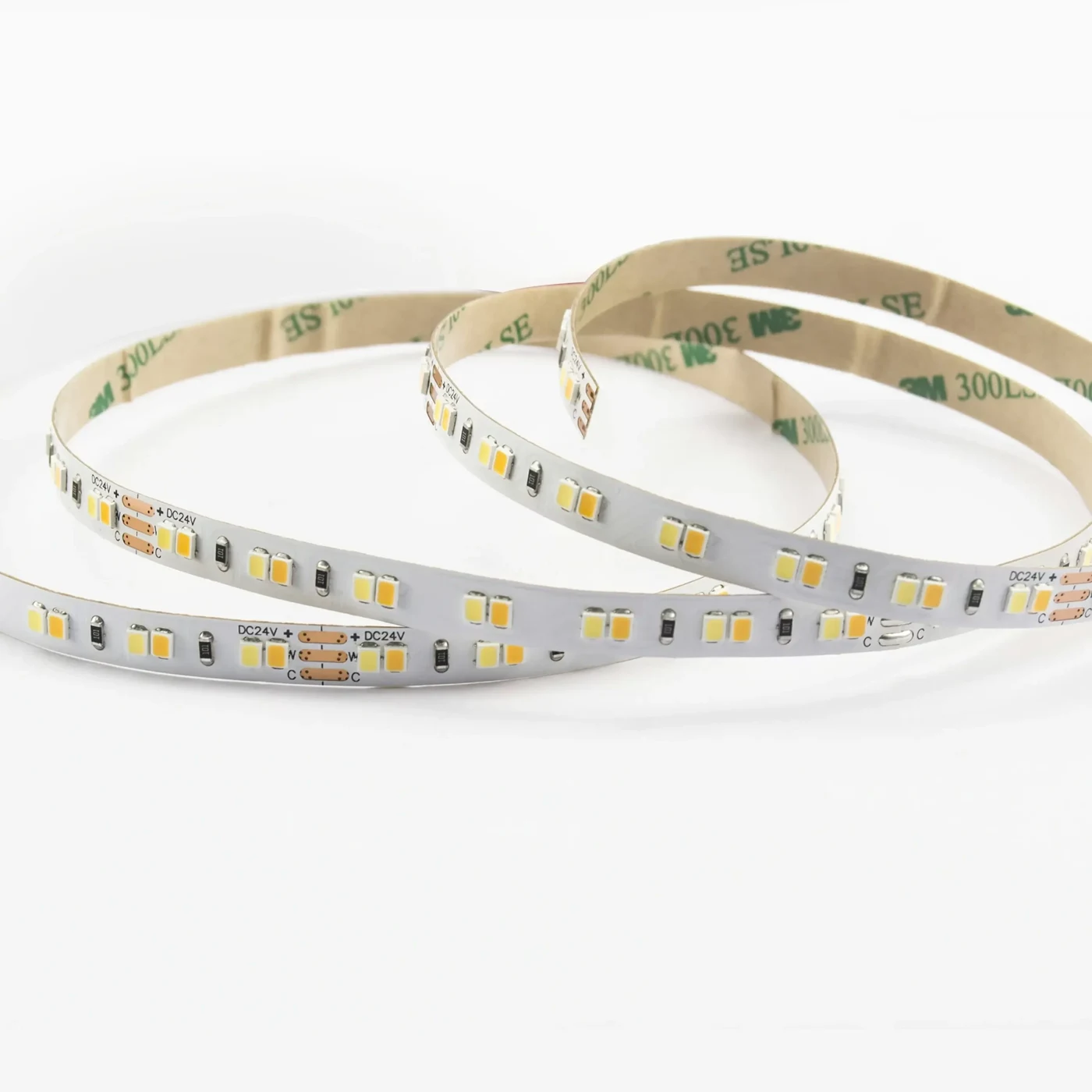
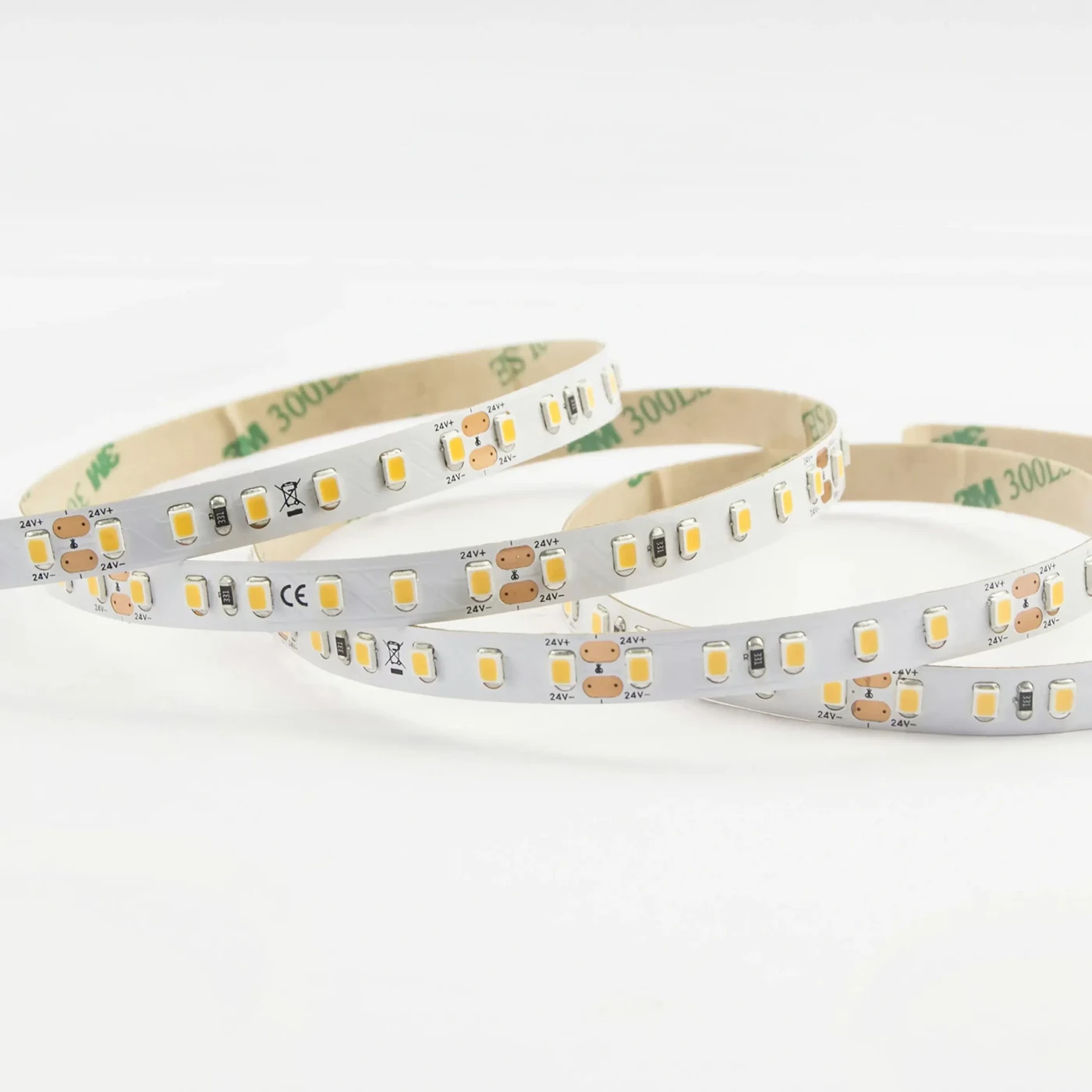
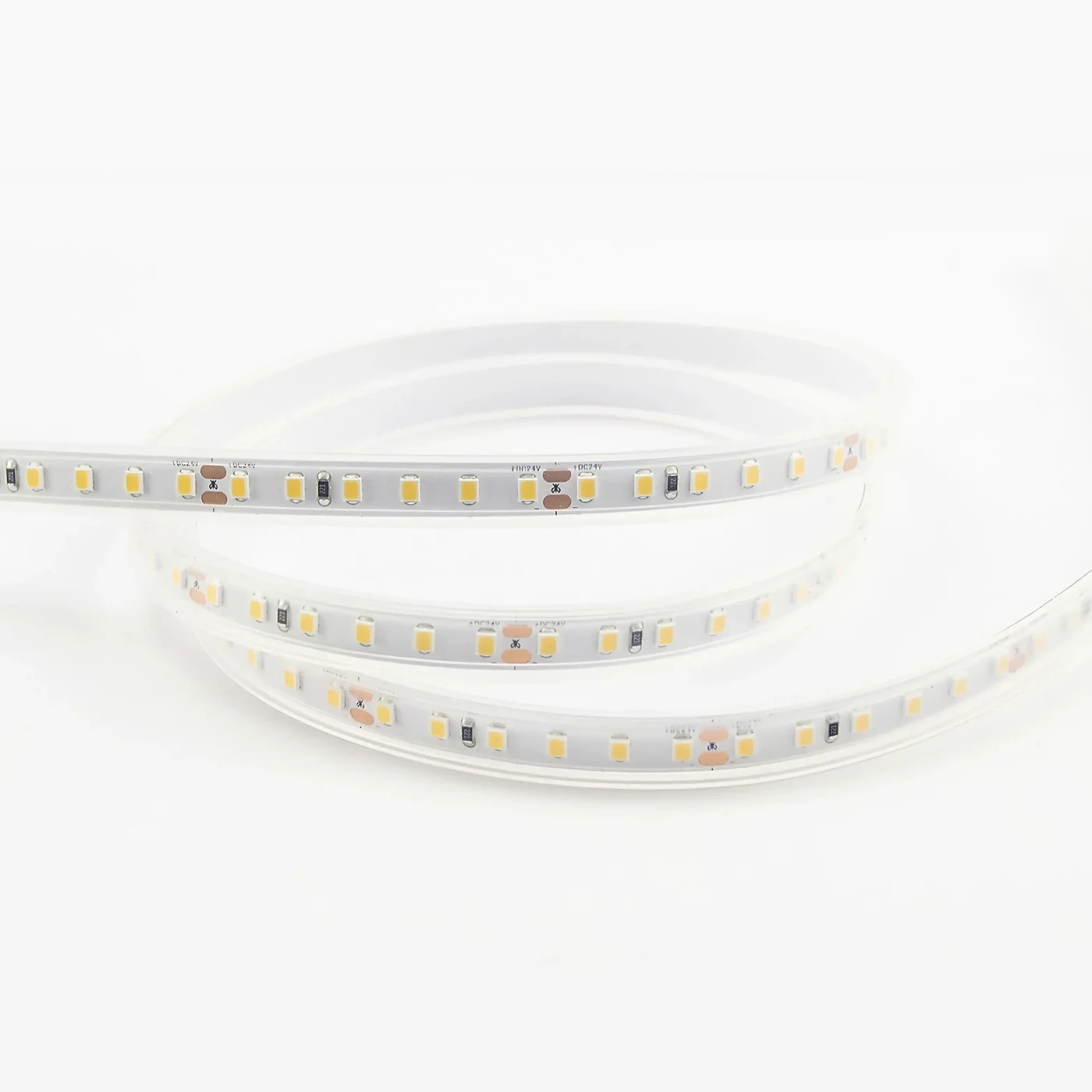
The photograph shows the physical arrangement of a tunable-white strip. Colour appearance in a photograph is not a CCT or colour-rendering measurement.

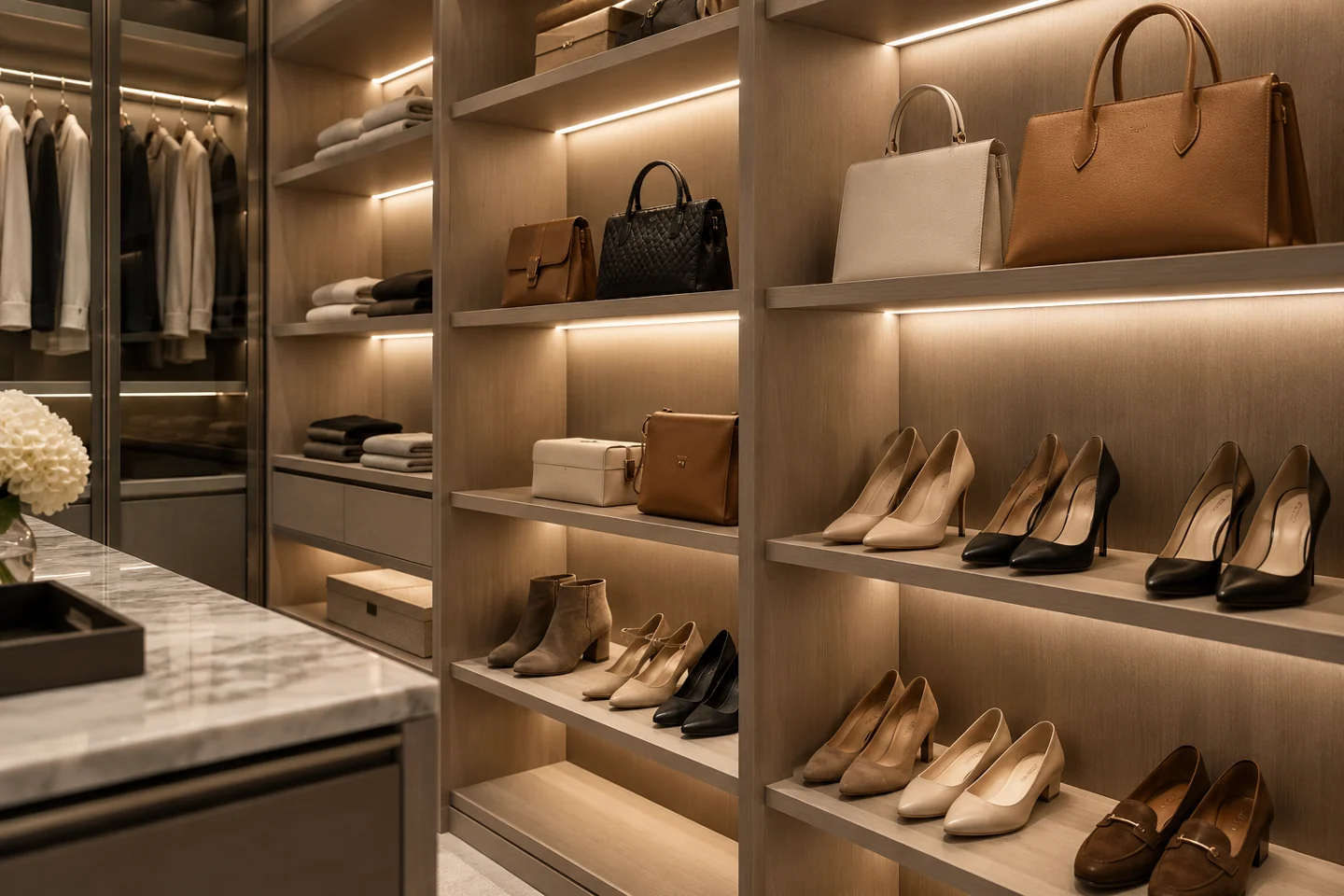
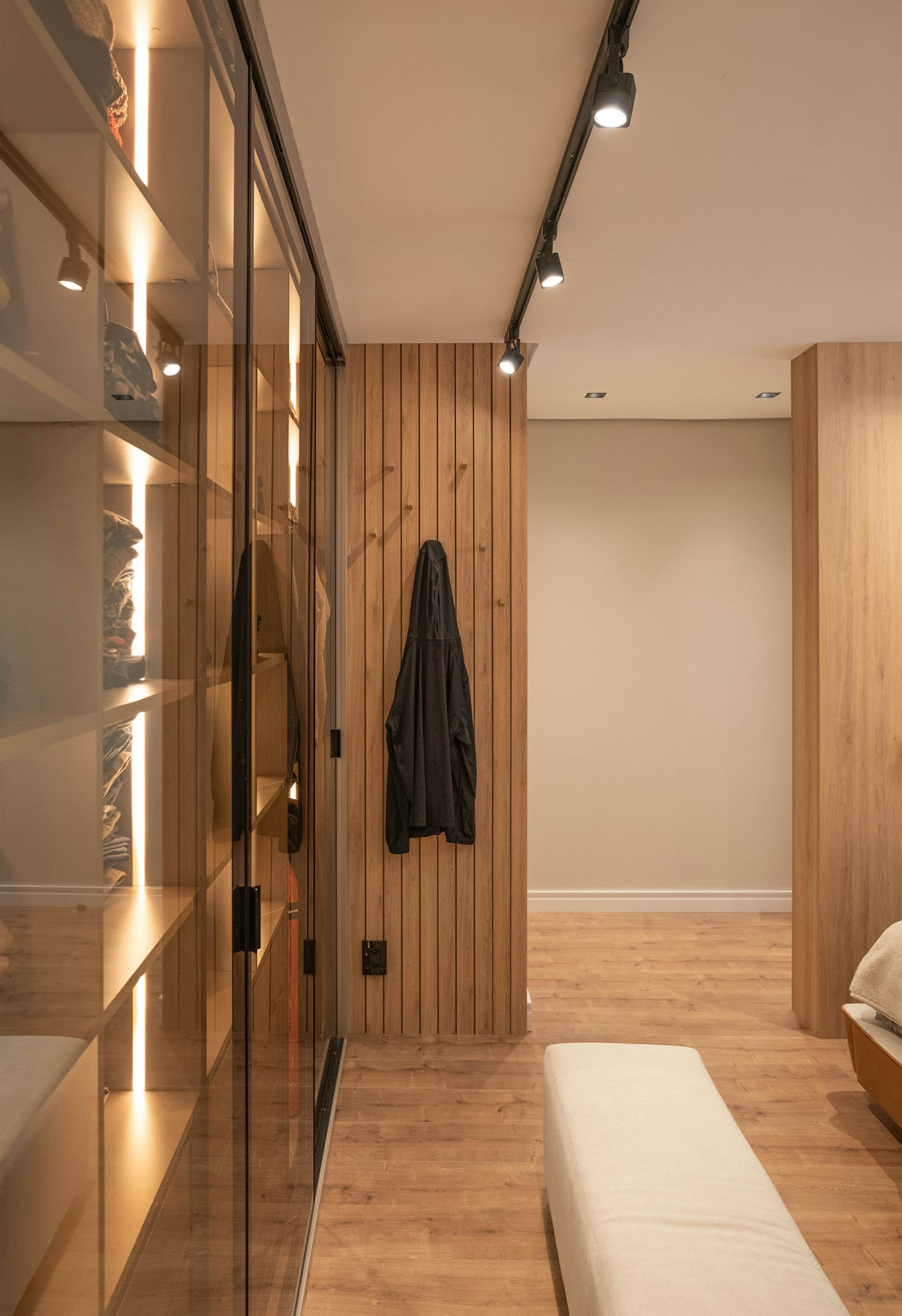
Assess clothes, shoes and bag materials under the intended viewing conditions, with the chosen driver and control.
Discuss this assemblyAssess clothes, shoes and bag materials under the intended viewing conditions, with the chosen driver and control.
List the displayed materials, required white-light range and control positions. Separate any R9 requirement from general CRI and CCT values in the brief.
Match adjustable-white channels, harness, controller and driver. Check channel allocation and operation at both ends of the adjustment range.
Compare garments and finishes at the intended settings and dimming levels. Request the relevant model and CCT colour-rendering data and retain the approved control settings.
DESIGN DECISIONS
Tunable white can support different presentation settings, but a CCT range does not describe how every fabric or leather colour will look. Record the proposed operating settings and colour-rendering evidence for the exact source. The warm and cool channels also need the correct controller, wiring and supply arrangement.
| Decision | Required input | Review with the sample |
|---|---|---|
| Colour quality | Fabric, leather and colour-rendering requirement | Review representative materials and relevant model data |
| Controls | White range, channel allocation and dimming | Match the tunable-white strip to the selected controller |
| Repeat supply | Approved settings and source reference | Keep the sample and its configuration identifiable |
Use this concept to mark mounting positions, cable paths and service clearances on your fixture drawing. Dimensions and component references belong on the project drawing before machining.
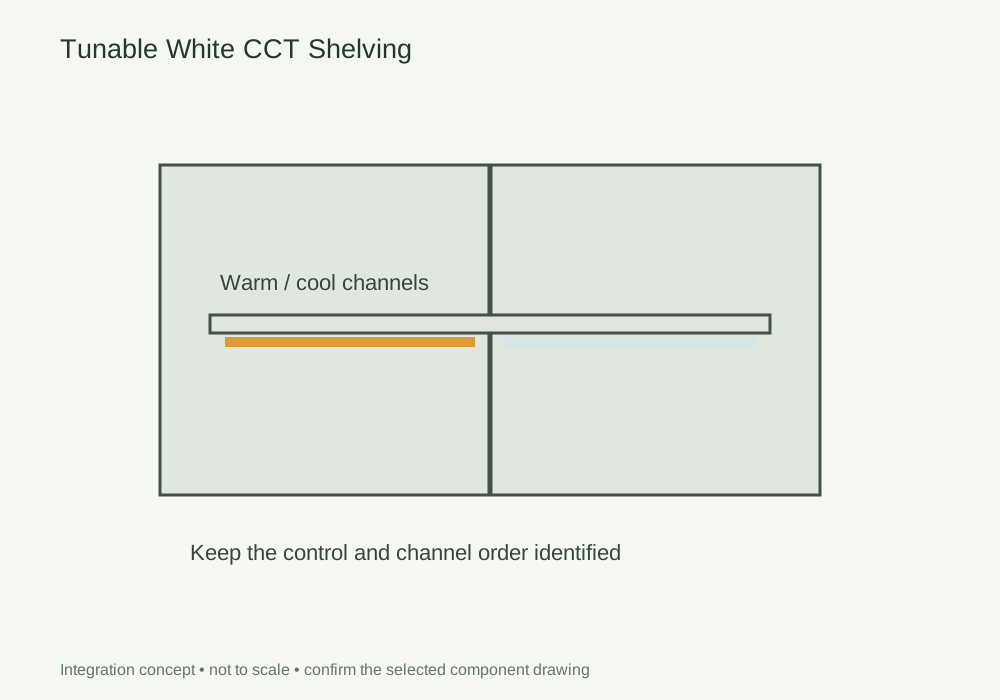
Photographs support the adjacent selection decisions. The exact delivered components and their performance need their own drawings, documents and sample review.
The photograph shows the physical arrangement of a tunable-white strip. Colour appearance in a photograph is not a CCT or colour-rendering measurement.
Use these selection questions in the assembly brief. Confirm availability, compatibility and performance for the proposed configuration.
Confirm channel allocation and the useful adjustment range on the actual controller.
Specify the required R9 and request the matching spectral report; CRI alone is not an R9 value.
Compare the source with the fixture dimensions and intended light effect. A complete supply schedule also identifies the profile, controls, connectors and the work included in the assembly.
State the quantity basis and open decisions. A labelled assembly schedule keeps design, purchasing and installation working from the same reference.
FREQUENTLY ASKED QUESTIONS
Practical answers for the furniture drawing, sample review and purchasing brief.
Ask a project question →No. If saturated red rendering matters, request the relevant R9 information separately for the selected source and CCT.
A controller cannot add a second white-light channel that the strip does not contain. Confirm the exact source configuration and connection arrangement.
The selected channel and common connection determine the wiring. Match the strip to a compatible controller and driver, and record the pin allocation. Do not connect it by copying the cable colours of another model.
Include Drawing revision and finished dimensions, Module quantity and order basis, Source, profile and control references. Add quantities by furniture module and identify the configuration or sample already selected. This gives the drawing review a defined scope before pricing and assembly approval.
CONTINUE THE SPECIFICATION
Use the wider furniture brief to coordinate this lighting detail with adjacent modules and project teams.
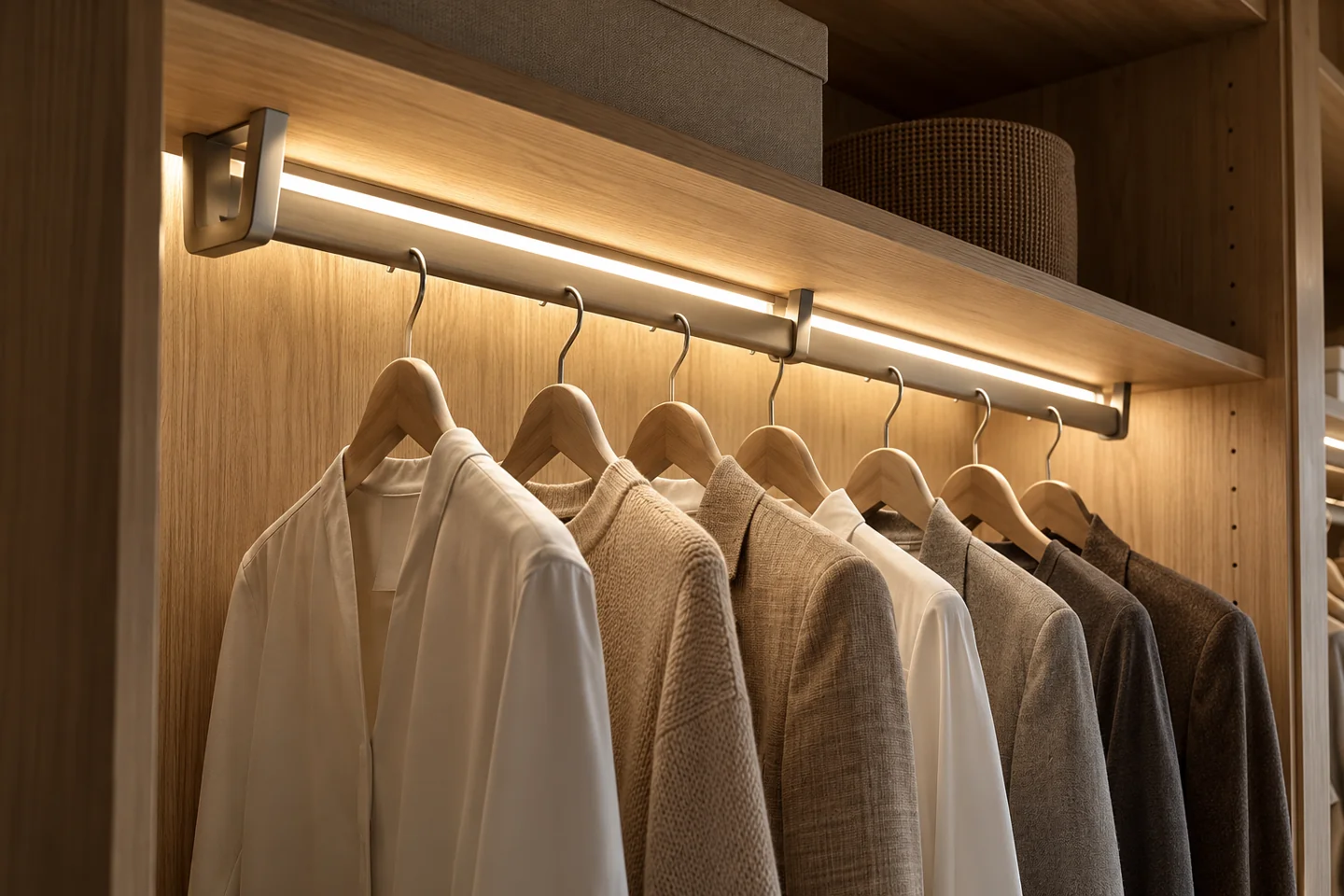
Resolve the structural support and light assembly as one detail; a glowing rail is also part of a loaded furniture component.
View the solution →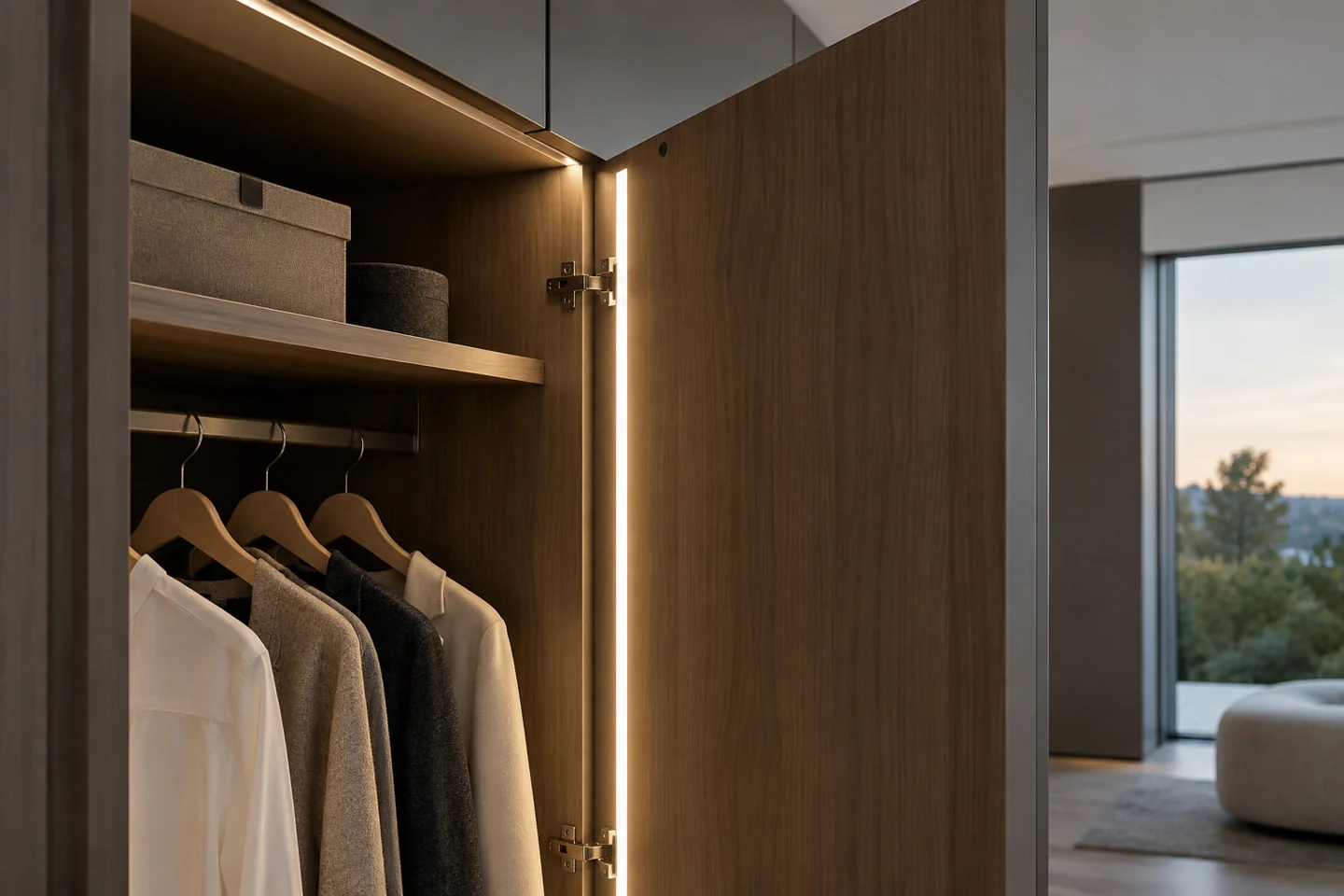
Define the switching logic before wiring the range. Door movement and body detection require different sensing layouts.
View the solution →