Leave room for the control interface
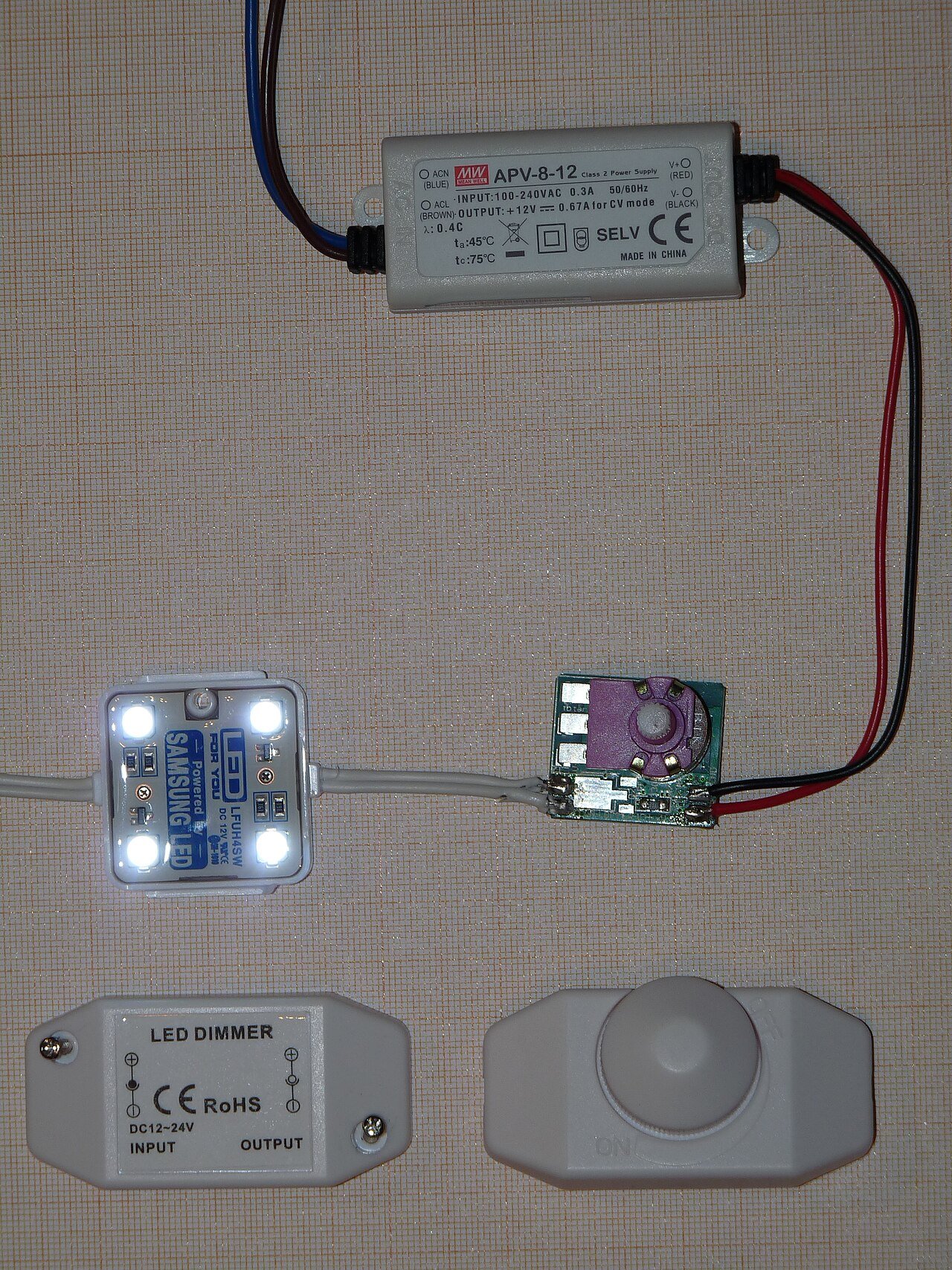
An inline dimmer is shown as a component reference. Agree which control interface the project needs; this example is not evidence of DALI-2, DMX512 or 0–10V compatibility.


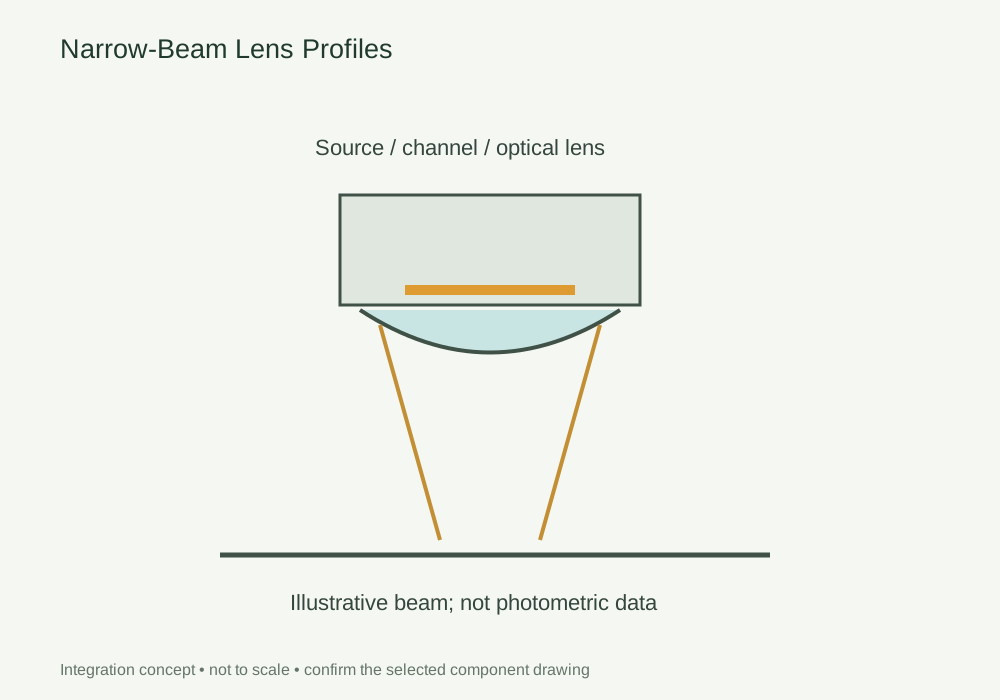
Select the optic with the source and working distance; a nominal beam angle does not establish the final distribution.
Discuss this assemblySelect the optic with the source and working distance; a nominal beam angle does not establish the final distribution.
Record working distance, target size, beam direction and sightlines. Show the available section for the source, optic and leads; nominal beam angle alone is insufficient.
Match the lens, source and channel, checking alignment and retention. Coordinate dimming and wiring with the controls team and allow inspection and cleaning access.
Evaluate distribution on the target finish and size. Check spill, glare, overlap and low-level control, then retain the approved optical and electrical references.
DESIGN DECISIONS
A narrow beam is useful only when its distribution suits the target and working distance. Nominal beam angle does not describe spill, overlap, alignment tolerance or the visible source image. Resolve the lens, LED section and retention method as an optical assembly before defining the finished profile length.
| Decision | Required input | Review with the sample |
|---|---|---|
| Target geometry | Distance, width and aiming direction | Compare the distribution on the actual target size |
| Optic fit | Lens, source and channel references | Check alignment and mechanical retention |
| Controls | Driver and dimming interface | Review low-level operation with the proposed control system |
Use this concept to mark mounting positions, cable paths and service clearances on your fixture drawing. Dimensions and component references belong on the project drawing before machining.
Photographs support the adjacent selection decisions. The exact delivered components and their performance need their own drawings, documents and sample review.
An inline dimmer is shown as a component reference. Agree which control interface the project needs; this example is not evidence of DALI-2, DMX512 or 0–10V compatibility.
Use these selection questions in the assembly brief. Confirm availability, compatibility and performance for the proposed configuration.
Review bend limits and the measured distribution in the intended mounting detail.
Confirm lens fit, alignment and maintenance access.
Check dimming compatibility, low-level behaviour and the required wiring arrangement.
Compare the source with the fixture dimensions and intended light effect. A complete supply schedule also identifies the profile, controls, connectors and the work included in the assembly.
This detail includes components beyond an LED strip. The catalogue does not identify a complete, approved kit for this arrangement. Send the fixture section and required operation so the source, control and mechanical interfaces can be reviewed together.
Compare catalogue light sources → Review the wider furniture system →
Discuss components for this detailState the quantity basis and open decisions. A labelled assembly schedule keeps design, purchasing and installation working from the same reference.
FREQUENTLY ASKED QUESTIONS
Practical answers for the furniture drawing, sample review and purchasing brief.
Ask a project question →Do not assume it. Source size, position and spacing can change the distribution. Re-evaluate the exact source-lens-channel combination.
No. Those terms concern control interfaces. Optical distribution and control compatibility need separate evidence and sample review.
No. The source, lens, mounting geometry and target distance form the optical assembly. Request the relevant distribution data and compare the intended effect on a representative display detail.
Include Drawing revision and finished dimensions, Module quantity and order basis, Source, profile and control references. Add quantities by furniture module and identify the configuration or sample already selected. This gives the drawing review a defined scope before pricing and assembly approval.
CONTINUE THE SPECIFICATION
Use the wider furniture brief to coordinate this lighting detail with adjacent modules and project teams.

Use a representative display mock-up to agree sparkle, metal tone, reflections and visitor comfort.
View the solution →
Set conservation and glare requirements with the collection team rather than inferring them from an LED label.
View the solution →