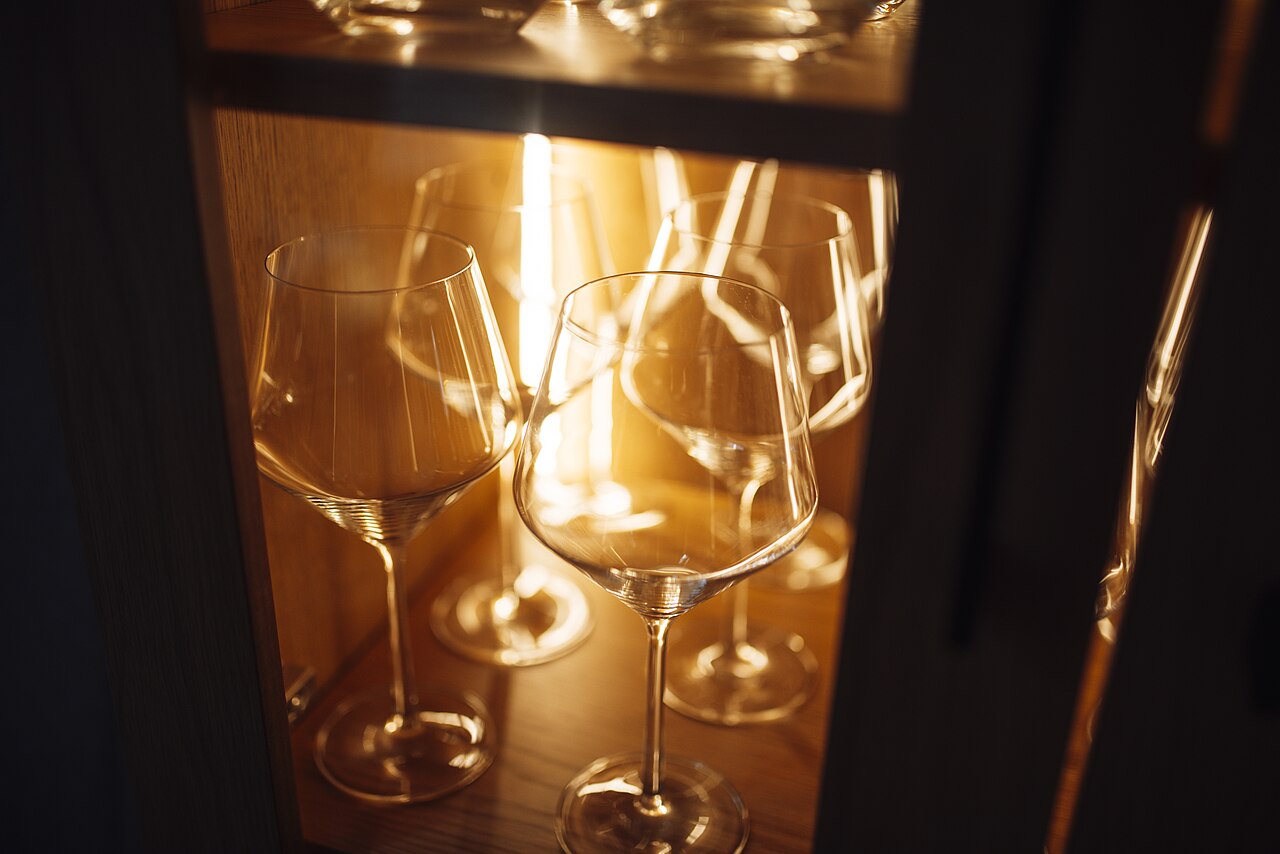
Glassware, warm backlight and reflections
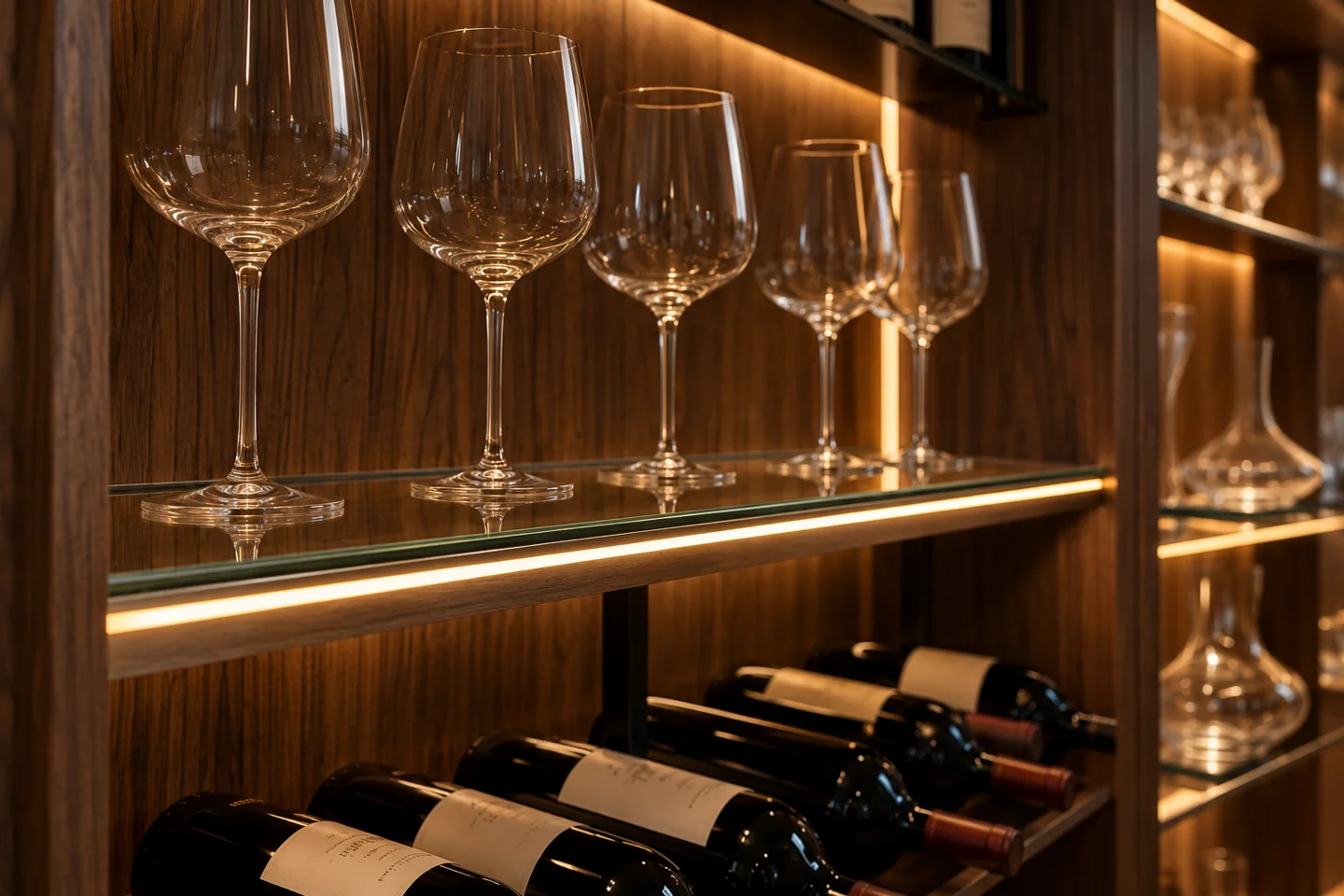
Use the real cabinet photograph to review the relationship between glass, objects and the surrounding finish. It does not demonstrate low-heat performance or a magnetic shelf power system.

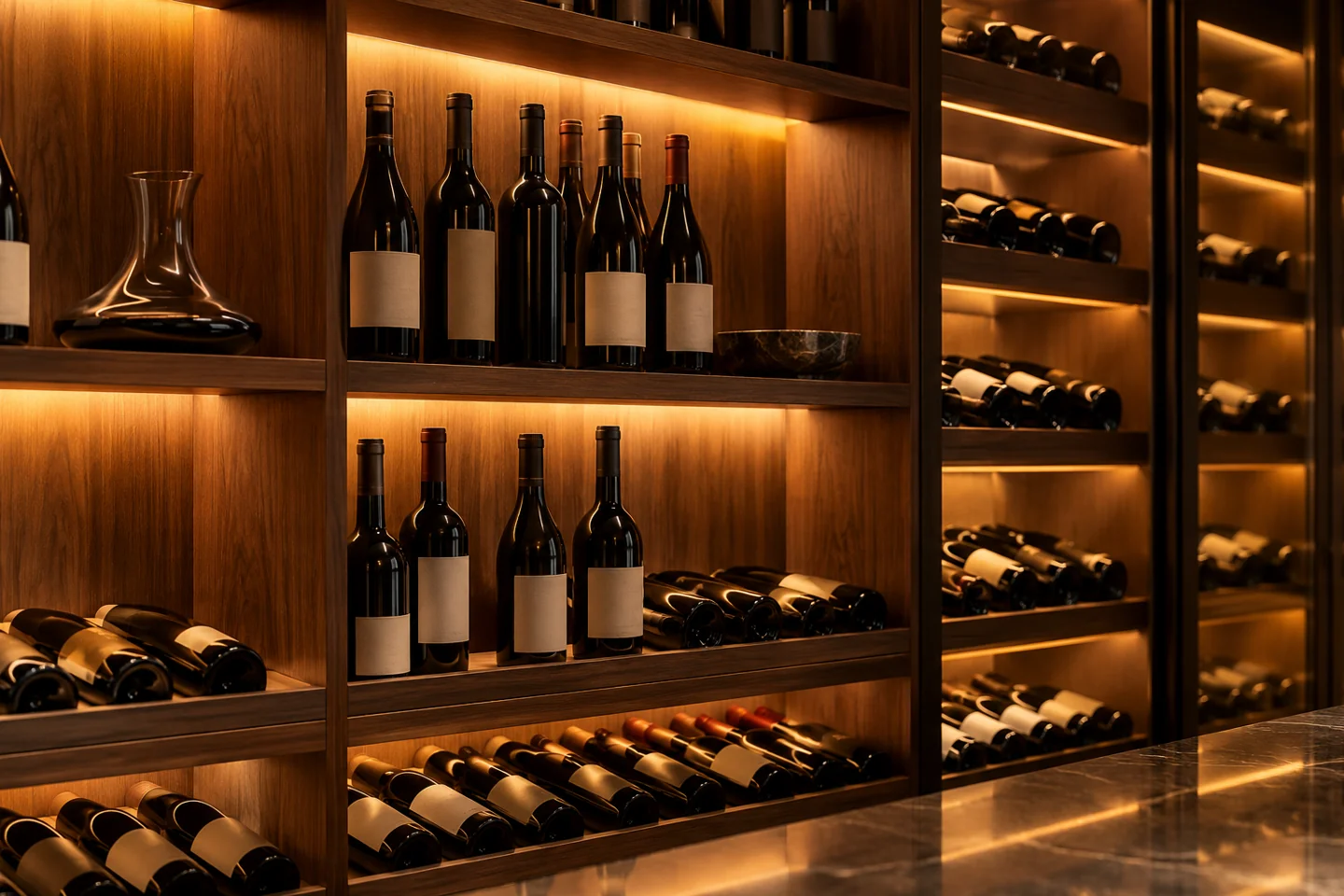
Balance label readability and the cabinet finish with the permitted temperature conditions around stored bottles.
Discuss this assemblyBalance label readability and the cabinet finish with the permitted temperature conditions around stored bottles.
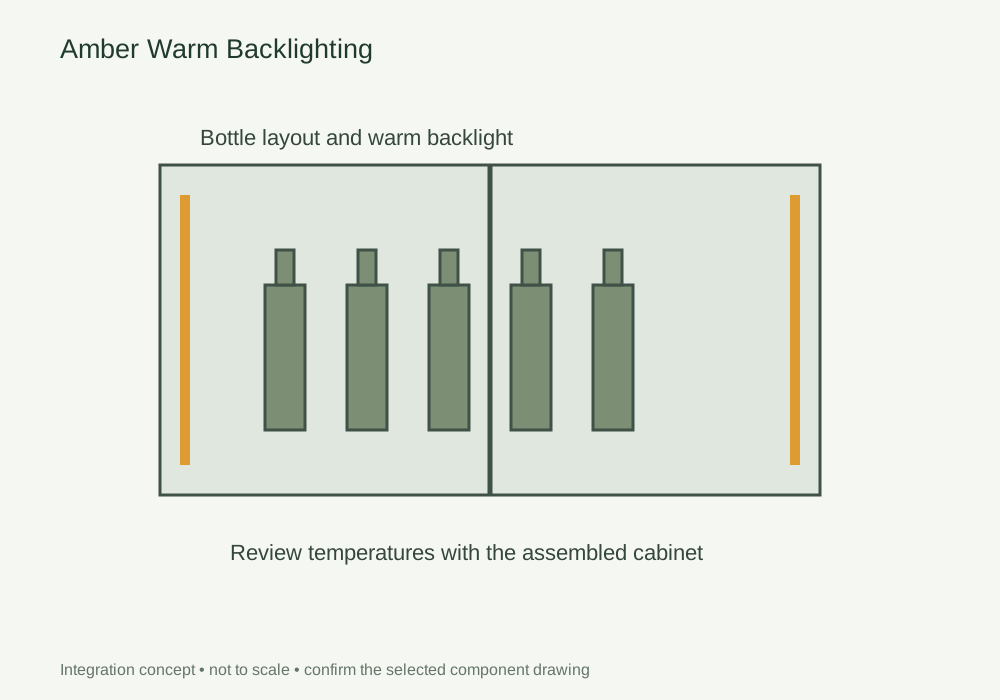
Define bottle layout, cabinet finish and permitted operating conditions. State the selected warm CCT separately from the locations and limits for temperature assessment.
Coordinate operating power, mounting, ventilation and driver position. Keep electrical parts accessible without disturbing the stored collection, and identify the selected control configuration.
Evaluate bottle labels and warm appearance under the intended settings. Assess the cabinet temperature under the planned operating schedule rather than describing the result as heat-free.
DESIGN DECISIONS
Amber light can complement timber and bottle labels, but selecting 2200K or 2700K does not remove the electrical power dissipated inside a cabinet. Keep appearance approval separate from the temperature assessment. The source operating power, ventilation, mounting surface and driver location belong in the wine-storage brief.
| Decision | Required input | Review with the sample |
|---|---|---|
| Colour appearance | Bottle labels, wood finish and selected CCT | Approve one physical sample under the intended ambient light |
| Operating conditions | Enclosure, duty cycle and temperature limits | Assess the installed assembly under agreed conditions |
| Service | Bottle layout and driver access | Allow replacement without dismantling the storage arrangement |
Use this concept to mark mounting positions, cable paths and service clearances on your fixture drawing. Dimensions and component references belong on the project drawing before machining.
Photographs support the adjacent selection decisions. The exact delivered components and their performance need their own drawings, documents and sample review.
Use the real cabinet photograph to review the relationship between glass, objects and the surrounding finish. It does not demonstrate low-heat performance or a magnetic shelf power system.
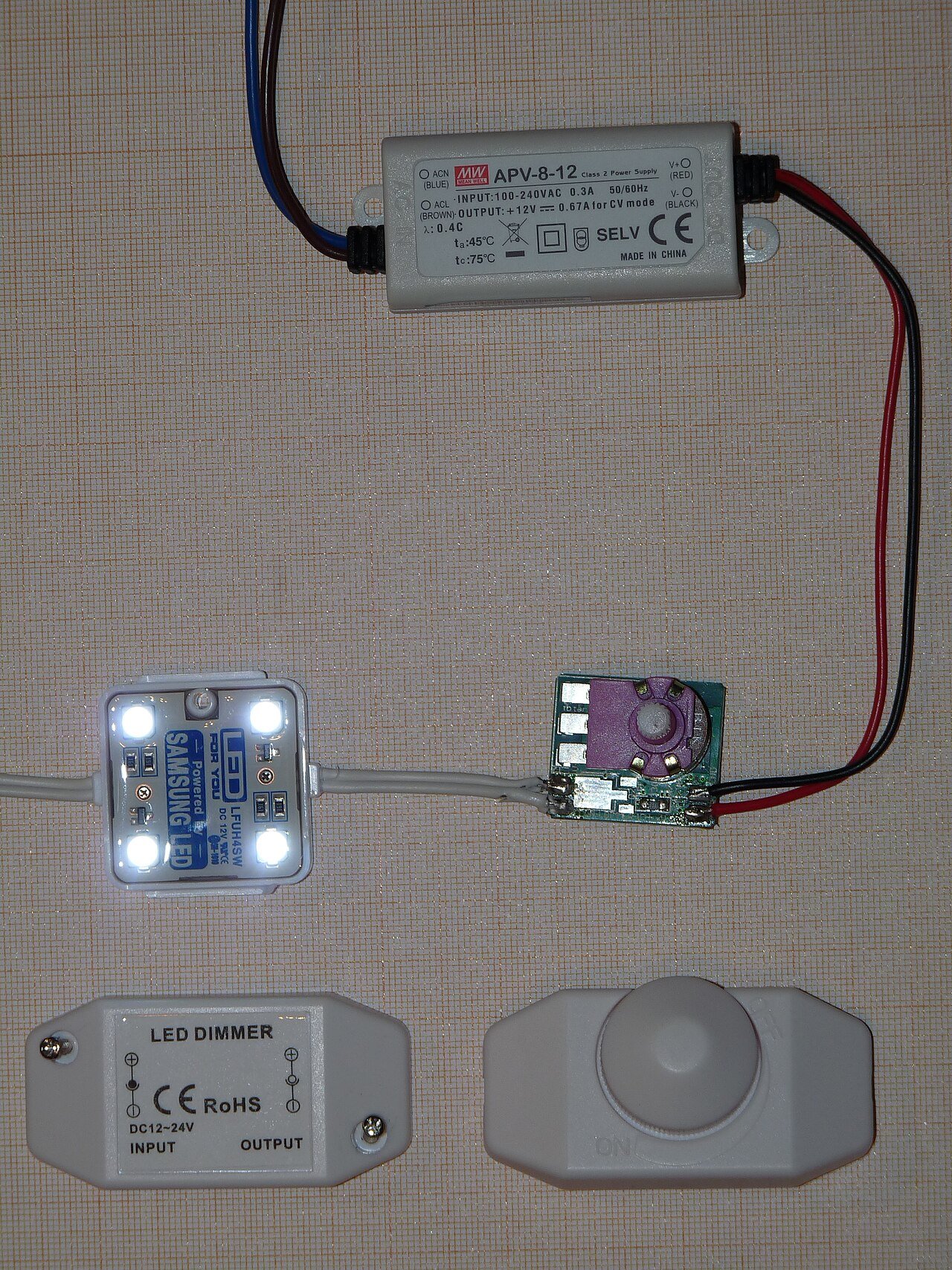
An inline dimmer is shown as a component reference. Agree which control interface the project needs; this example is not evidence of DALI-2, DMX512 or 0–10V compatibility.
Use these selection questions in the assembly brief. Confirm availability, compatibility and performance for the proposed configuration.
State the selected CCT and colour consistency requirement, rather than treating both values as one setting.
Review operating power, mounting and cabinet ventilation under the intended use.
A brief using this phrase still needs thermal assessment: LED assemblies produce heat, so a heat-free result is not promised.
Confirm electrical compatibility, loading and an accessible ventilated location.
Compare the source with the fixture dimensions and intended light effect. A complete supply schedule also identifies the profile, controls, connectors and the work included in the assembly.
This detail includes components beyond an LED strip. The catalogue does not identify a complete, approved kit for this arrangement. Send the fixture section and required operation so the source, control and mechanical interfaces can be reviewed together.
Compare catalogue light sources → Review the wider furniture system →
Discuss components for this detailState the quantity basis and open decisions. A labelled assembly schedule keeps design, purchasing and installation working from the same reference.
FREQUENTLY ASKED QUESTIONS
Practical answers for the furniture drawing, sample review and purchasing brief.
Ask a project question →Treat that phrase as a search description, not a performance claim. LEDs and drivers dissipate heat. Define acceptable operating conditions and assess the proposed cabinet assembly.
No. The preferred appearance depends on label colours, timber and surrounding light. Compare both with representative bottles before fixing the configuration.
Compare the selected warm-light settings with the actual bottle labels, timber and glass. Include the proposed diffuser and background. Record the approved sample and operating conditions for subsequent batches.
Include Drawing revision and finished dimensions, Module quantity and order basis, Source, profile and control references. Add quantities by furniture module and identify the configuration or sample already selected. This gives the drawing review a defined scope before pricing and assembly approval.
CONTINUE THE SPECIFICATION
Use the wider furniture brief to coordinate this lighting detail with adjacent modules and project teams.
Keep the light source discreet around glass thickness, shelf supports and the cabinet front.
View the solution →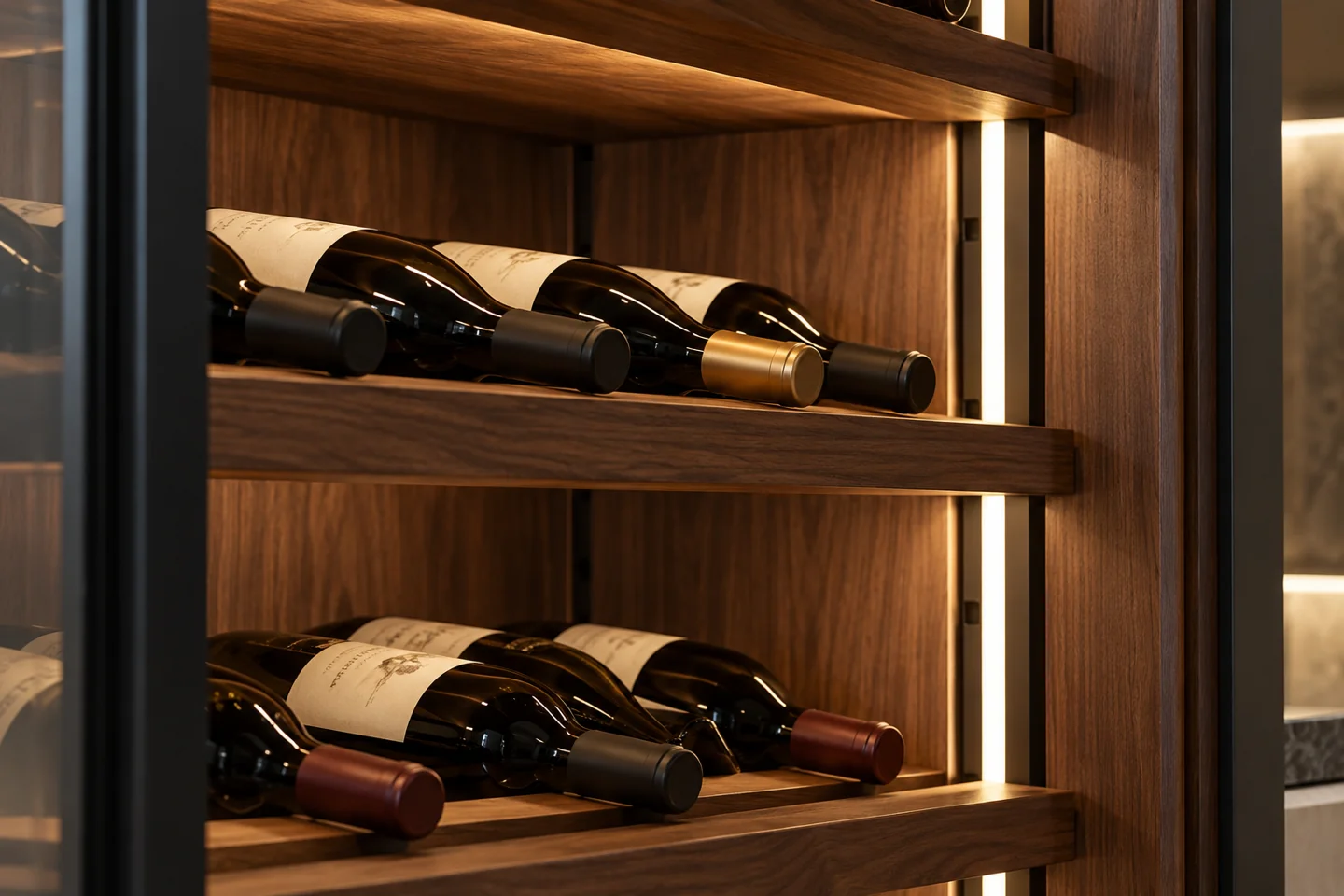
Coordinate shelf movement with the power interface. An apparently cable-free shelf still needs an identified electrical path.
View the solution →