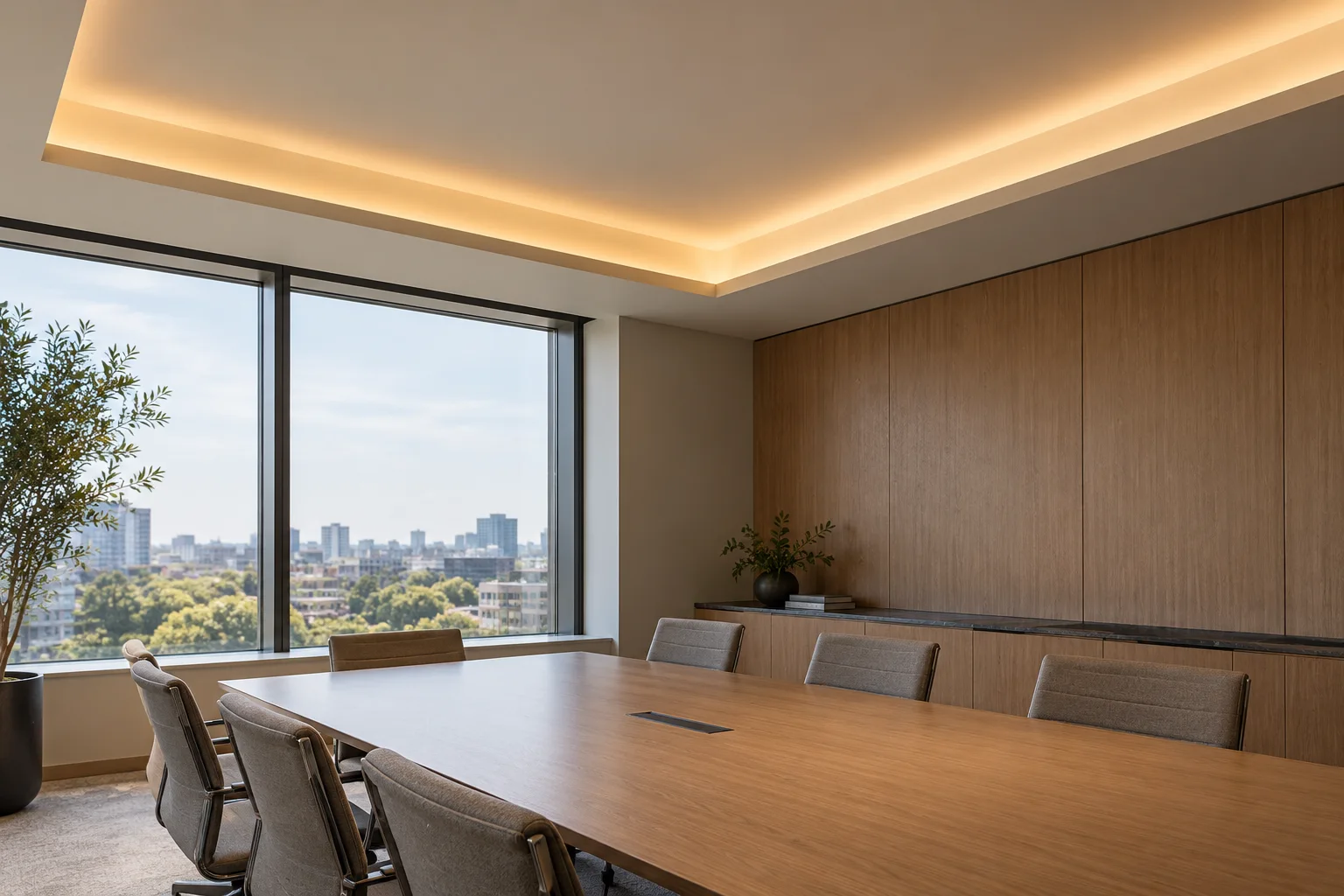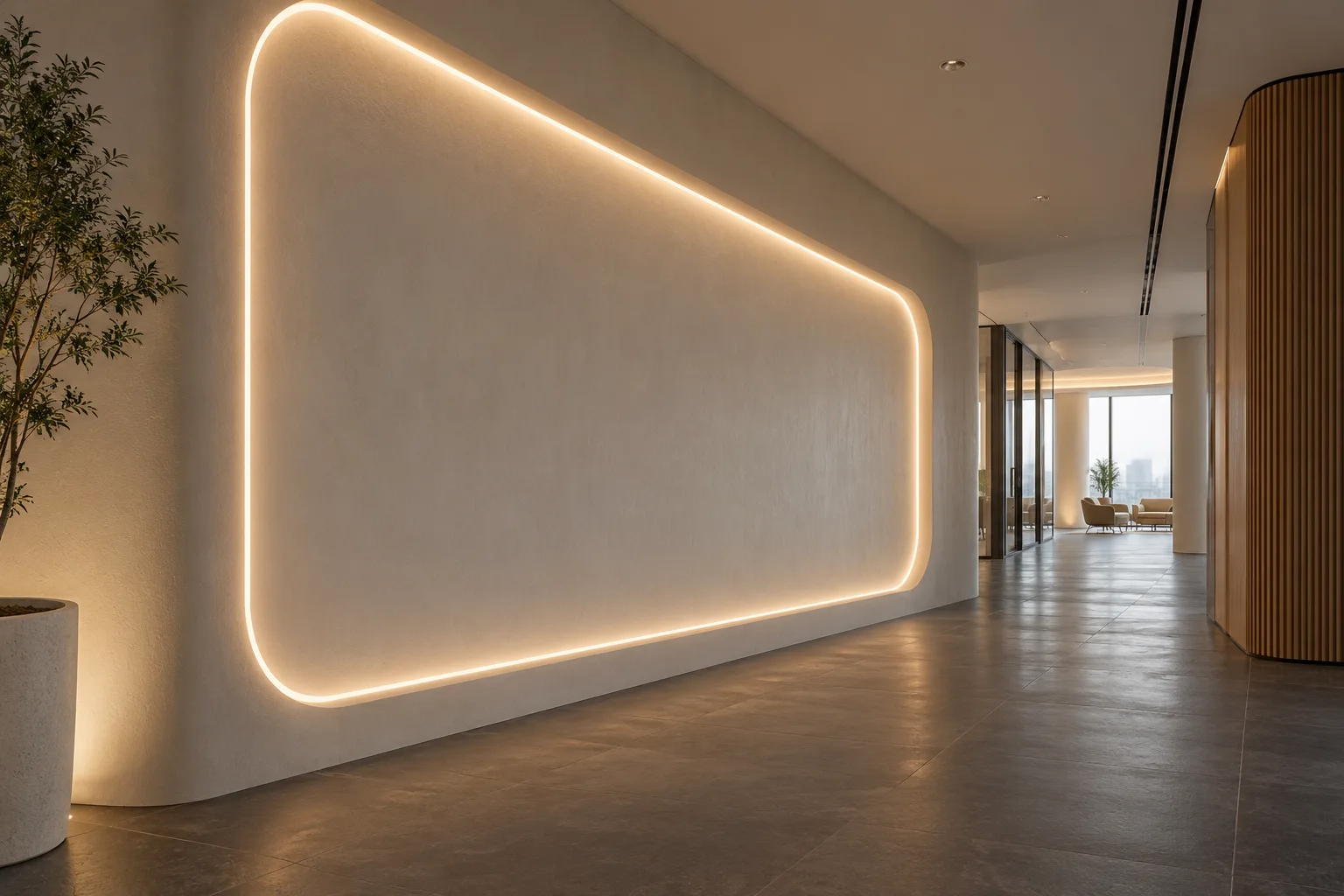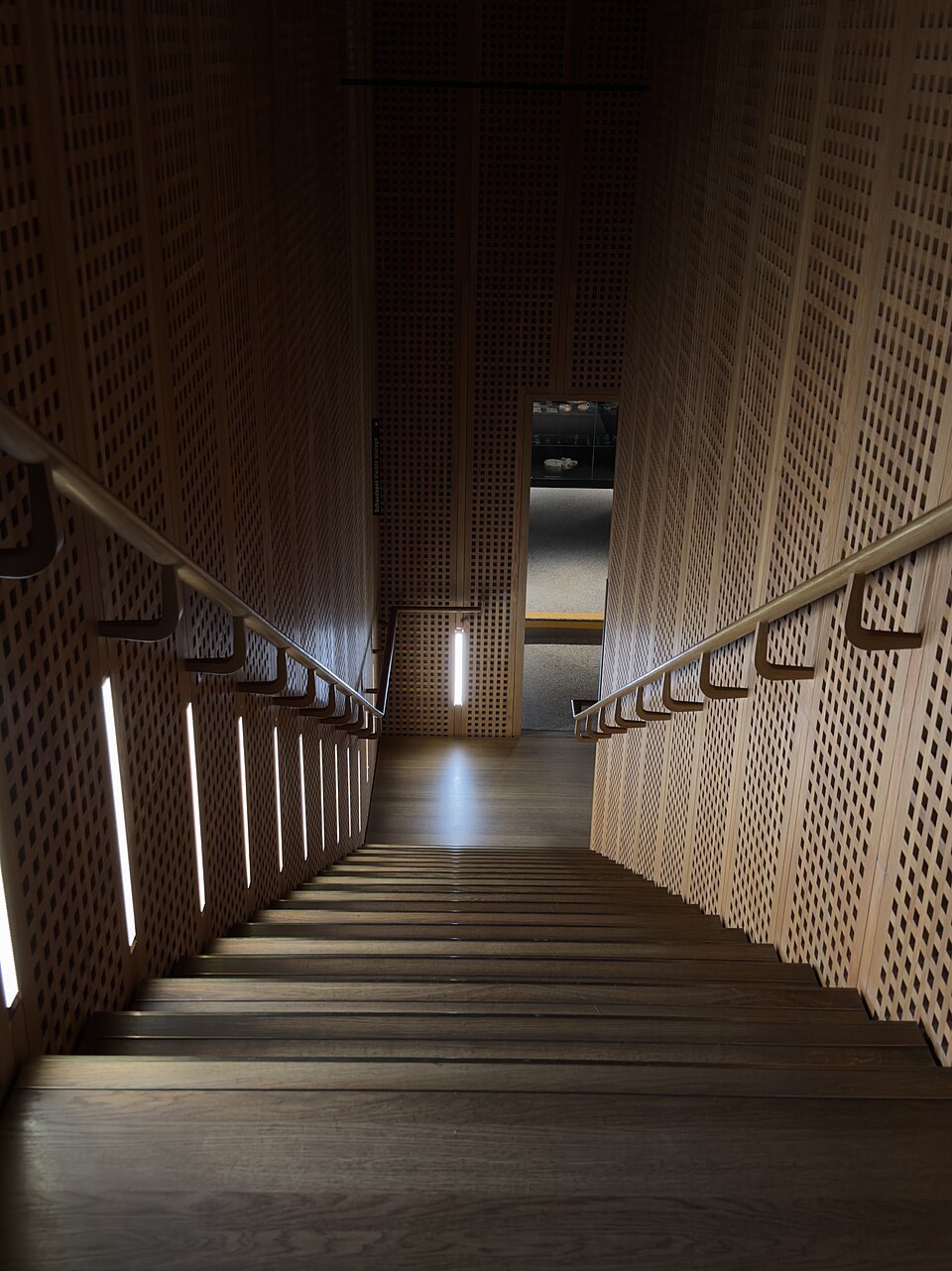
Linear light along a stair route
This real reference shows stair-side linear wall lighting. It illustrates architectural integration and viewing conditions, not sequential step control or a measured safety-lighting design.

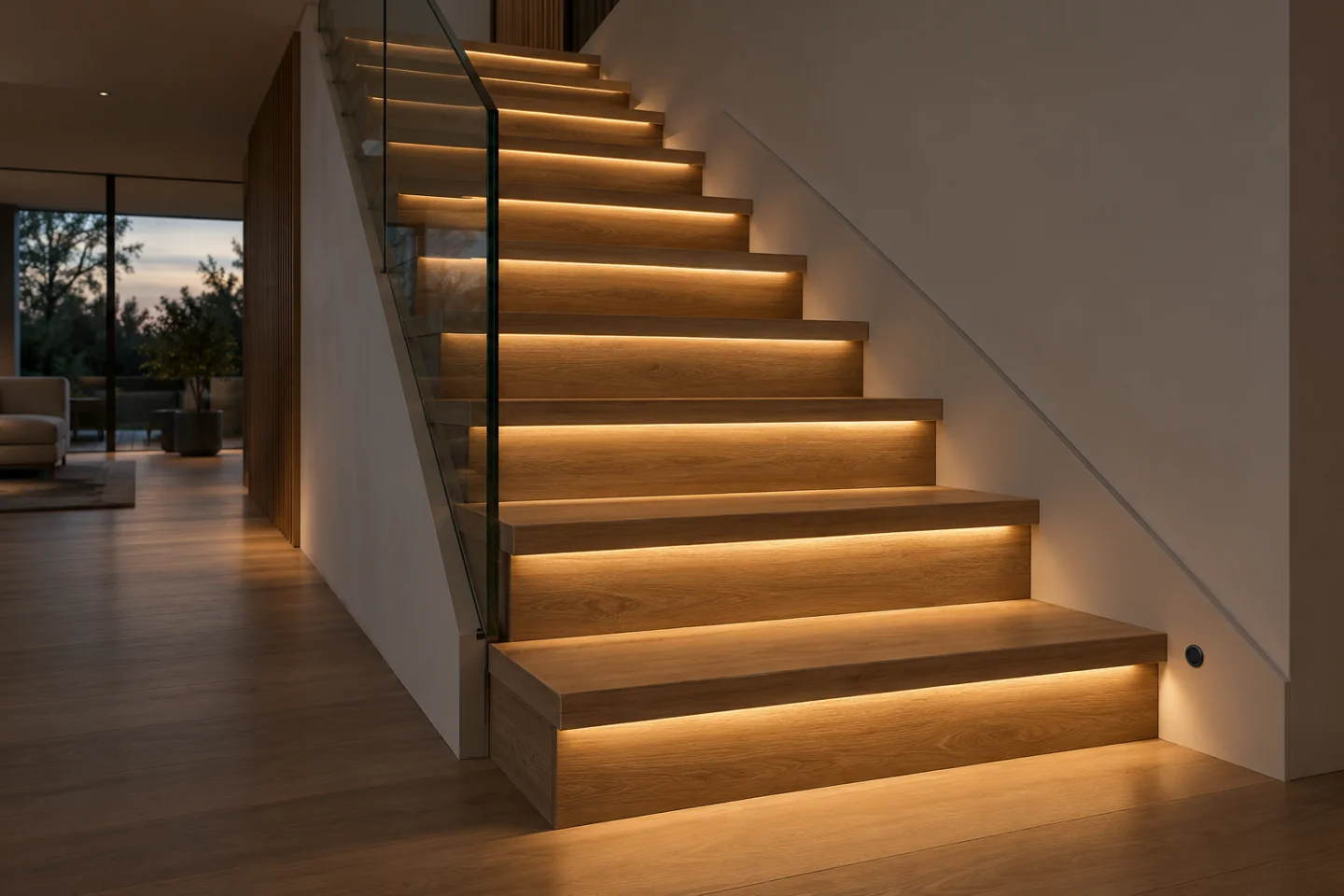
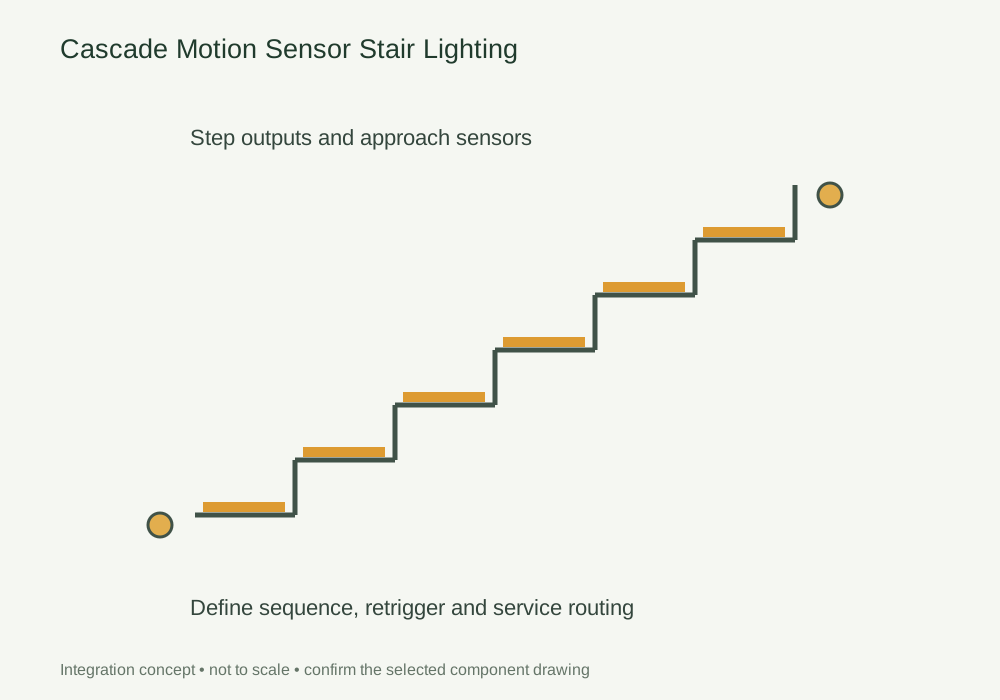
Define activation from both ends, the number of steps and the required fallback behaviour before selecting controls.
Discuss this assemblyDefine activation from both ends, the number of steps and the required fallback behaviour before selecting controls.
Provide step count, section lengths, top and bottom sensing positions and the intended sequence. Agree simultaneous approach, timeout and any steady-light or fallback behaviour.
Match controller channels, strip sections, loading and cable allocation. Document addressing for DMX512 proposals and keep required safety or emergency lighting within its own design.
Trial approach from both ends and the expected walking conditions. Check every channel and fallback mode and retain settings with the step-to-channel schedule.
DESIGN DECISIONS
A cascade sequence needs more than a step count. Define what should happen when two people approach from opposite ends, someone pauses, or a sensor is triggered again during the sequence. Keep decorative sequencing distinct from any required safety or emergency lighting design.
| Decision | Required input | Review with the sample |
|---|---|---|
| Channel schedule | Step count and section allocation | Map every step to its output and cable reference |
| Sensor logic | Top and bottom approach, retrigger and timeout | Agree simultaneous-use behaviour before sampling |
| Control interface | Controller, load and addressing | Document DMX512 addressing where that interface is selected |
Use this concept to mark mounting positions, cable paths and service clearances on your fixture drawing. Dimensions and component references belong on the project drawing before machining.
Photographs support the adjacent selection decisions. The exact delivered components and their performance need their own drawings, documents and sample review.
This real reference shows stair-side linear wall lighting. It illustrates architectural integration and viewing conditions, not sequential step control or a measured safety-lighting design.
Use these selection questions in the assembly brief. Confirm availability, compatibility and performance for the proposed configuration.
Confirm detection coverage, step allocation and the installation environment.
Record timing, direction, channel loads and the desired steady-light mode.
Confirm addressing, signal wiring and channel compatibility; DMX512 alone does not establish a safety-lighting function.
Compare the source with the fixture dimensions and intended light effect. A complete supply schedule also identifies the profile, controls, connectors and the work included in the assembly.
This detail includes components beyond an LED strip. The catalogue does not identify a complete, approved kit for this arrangement. Send the fixture section and required operation so the source, control and mechanical interfaces can be reviewed together.
Compare catalogue light sources → Review the wider furniture system →
Discuss components for this detailState the quantity basis and open decisions. A labelled assembly schedule keeps design, purchasing and installation working from the same reference.
FREQUENTLY ASKED QUESTIONS
Practical answers for the furniture drawing, sample review and purchasing brief.
Ask a project question →Specify the required simultaneous-approach and retrigger behaviour, then demonstrate it on the selected controller. Do not assume all cascade kits behave alike.
Do not assume that. Required safety and emergency lighting remains subject to the project design and applicable requirements.
Specify that behaviour in the controller brief and demonstrate it with the selected device. Include a paused user and simultaneous approaches from both ends. Different controllers can handle retriggering differently.
Include Drawing revision and finished dimensions, Module quantity and order basis, Source, profile and control references. Add quantities by furniture module and identify the configuration or sample already selected. This gives the drawing review a defined scope before pricing and assembly approval.
CONTINUE THE SPECIFICATION
Use the wider furniture brief to coordinate this lighting detail with adjacent modules and project teams.
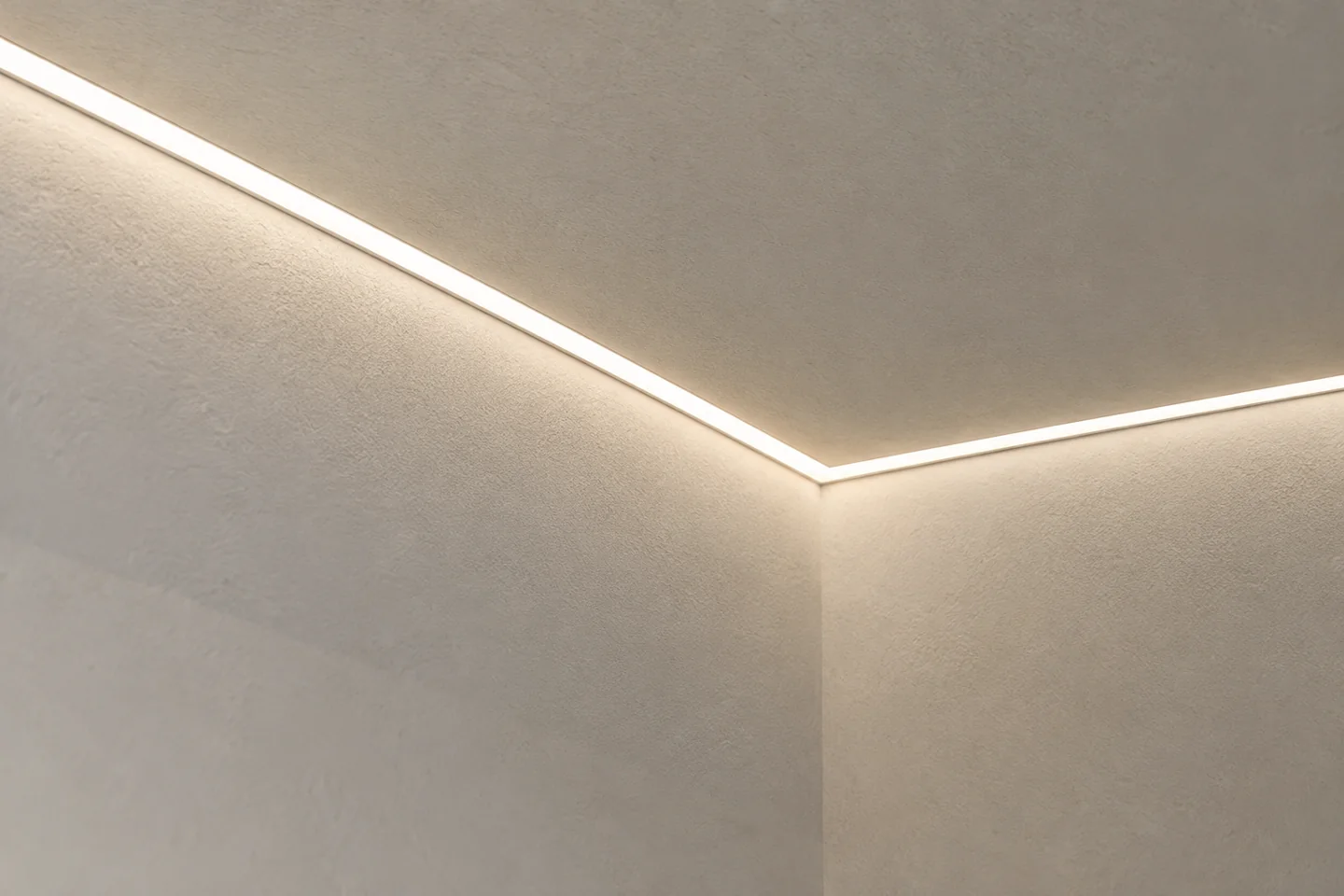
Resolve the profile-to-board detail, joint treatment and finished light opening before the finishing trades start.
View the solution →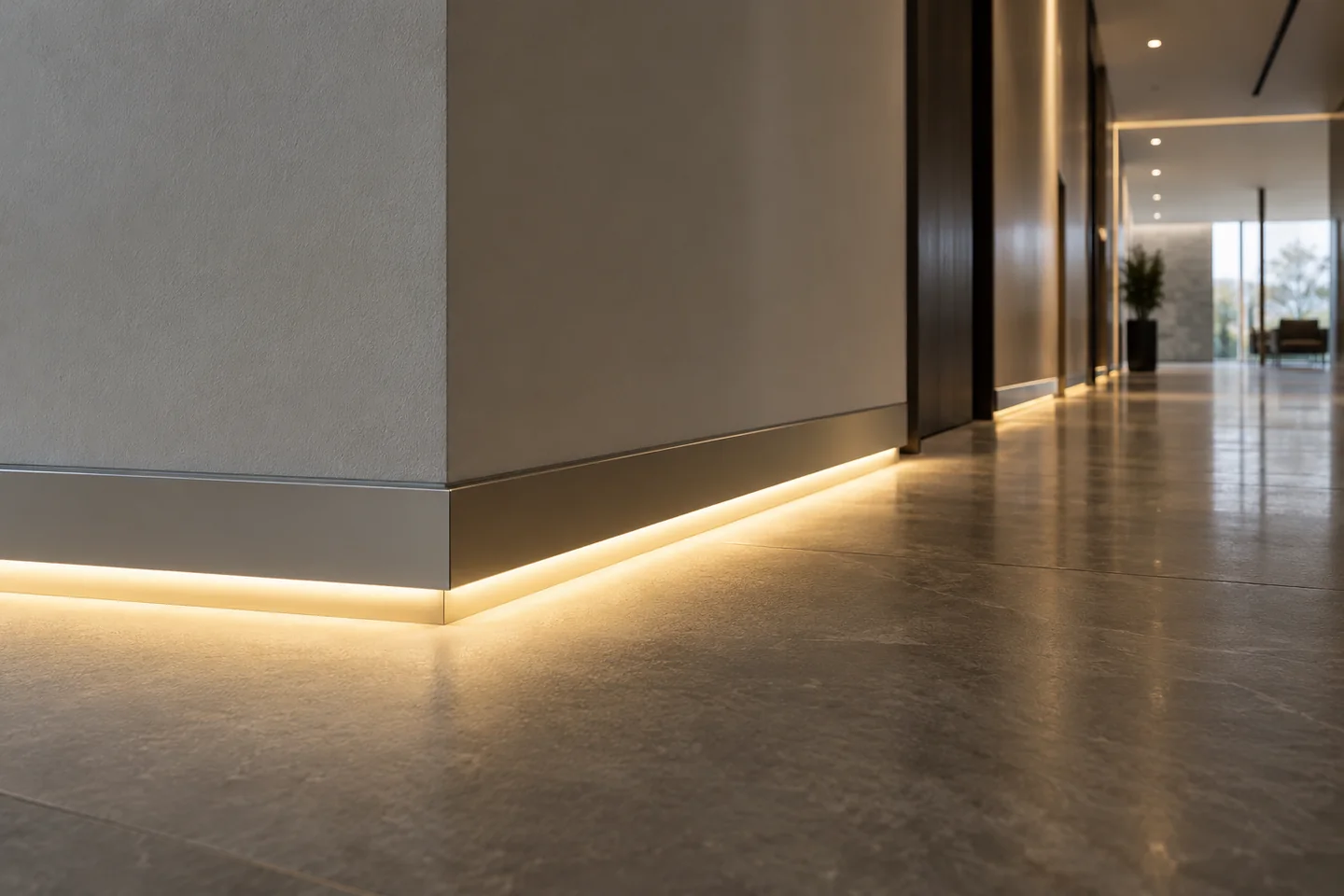
Plan a continuous line through doors, corners and finishes with identified feed points and replaceable light sections.
View the solution →