Jewellery Display LED Lighting for Showcase Manufacturers
Specify jewellery-case lighting with actual merchandise, glazing and viewing tests. Keep colour evidence, reflections and repeat-order configuration distinct.
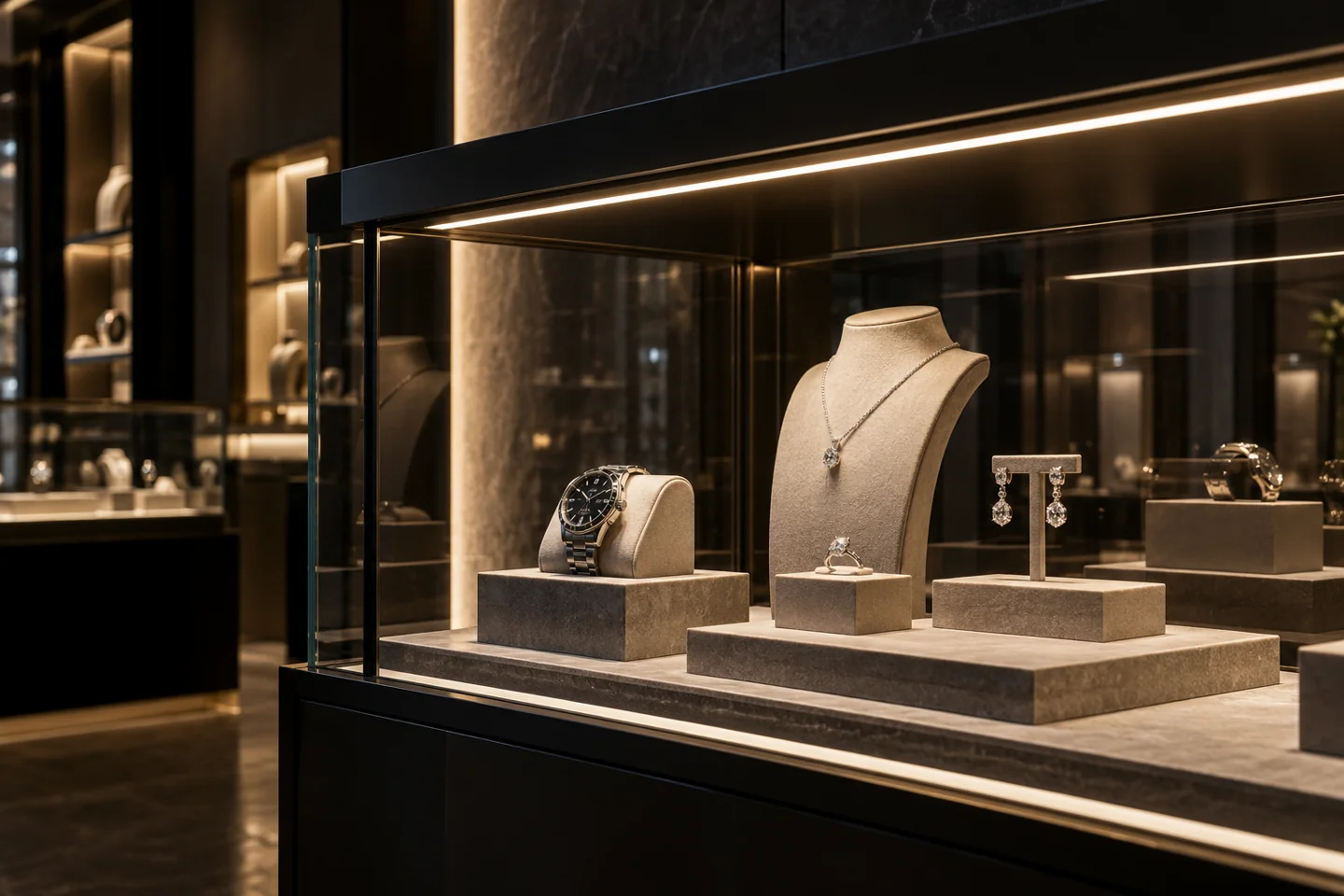
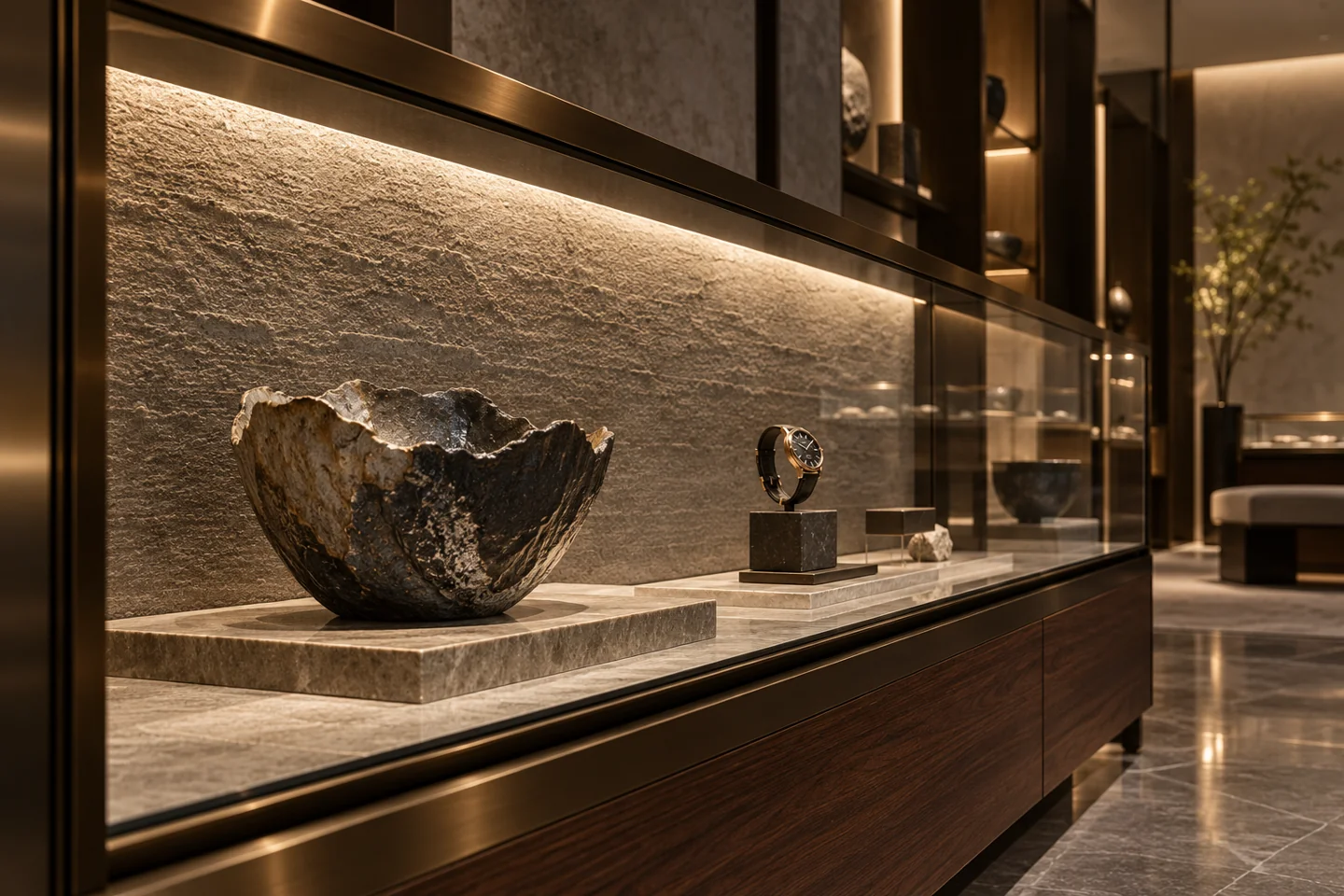
AI-generated application illustration; not a completed BEXLIGHT project or measured performance. Component interfaces are illustrative.
Choose the case lighting around the merchandise the retailer must present
A showcase fabricator sourcing jewellery lighting has to turn a retailer’s visual expectations into a repeatable case assembly. Metal finishes, stone colours, display fabrics and glass all influence that decision, while the available mounting space can be tightly constrained. When sourcing jewellery showcase lighting modules, compare exact configurations within the case and preserve the accepted combination for future production. A useful enquiry therefore connects the merchandise approval method to case drawings, lighting positions and delivery scope. This gives purchasing an evidence-based comparison without relying on a single colour-rendering claim.
Upper perimeter of glazed cases
Position glass showcase strip lighting in relation to the case frame, glass joints and the visitor’s approach. A line that is hidden when looking down may appear reflected from a lower angle. Include the actual trim and display risers so the review can distinguish useful merchandise illumination from light escaping onto the glass or surrounding joinery.
Vertical side frames
Side-mounted sections can reach displays that are shaded by upper furniture elements, but their position also changes the highlights seen on metal and stones. Check the intended merchandise arrangement at several heights. Identify left and right assemblies separately when the mounting, lead direction or visible case frame prevents them from being interchangeable.
Raised displays and presentation niches
A feature niche or raised central display may need a configuration distinct from the surrounding case. Define the item positions and backdrop rather than extending a perimeter-light specification by default. Keep any local adjustment or separate circuit visible in the order schedule so the retailer can reproduce the approved presentation after merchandise changes.
See the installation behind the specification.
Each view addresses a named lighting detail. Illustrations show the design intent; select the actual components against the drawing and a representative sample.
AI-generated application illustration; not a completed BEXLIGHT project or measured performance. Component interfaces are illustrative.
Narrow-Beam Lens Profiles
Select the optic with the source and working distance; a nominal beam angle does not establish the final distribution.
Photographs support the adjacent selection decisions. The exact delivered components and their performance need their own drawings, documents and sample review.
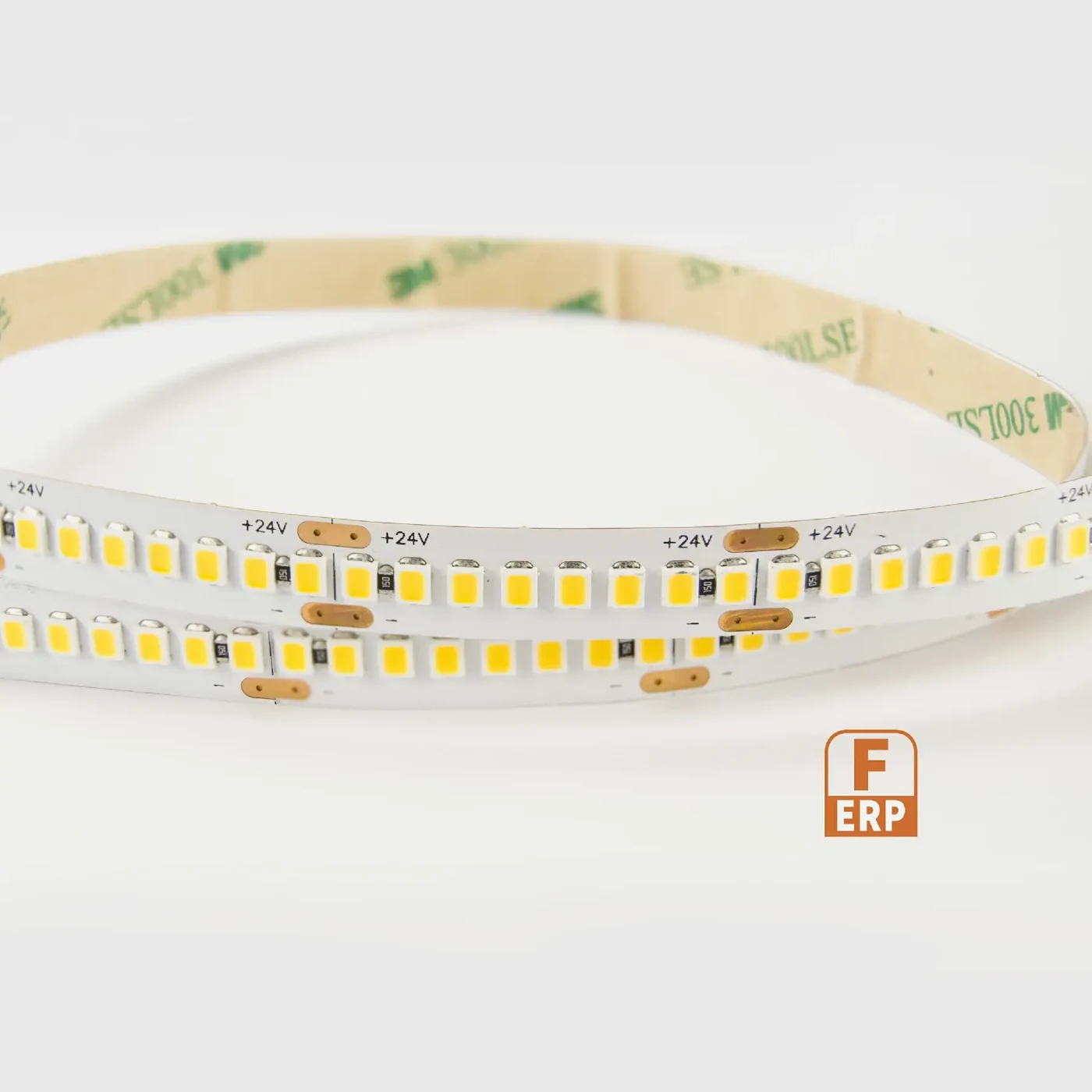
Source catalogue photograph: SR005-240P2835IP20-FR90. A candidate light source; no fixture compatibility or installed performance is established by the photograph.
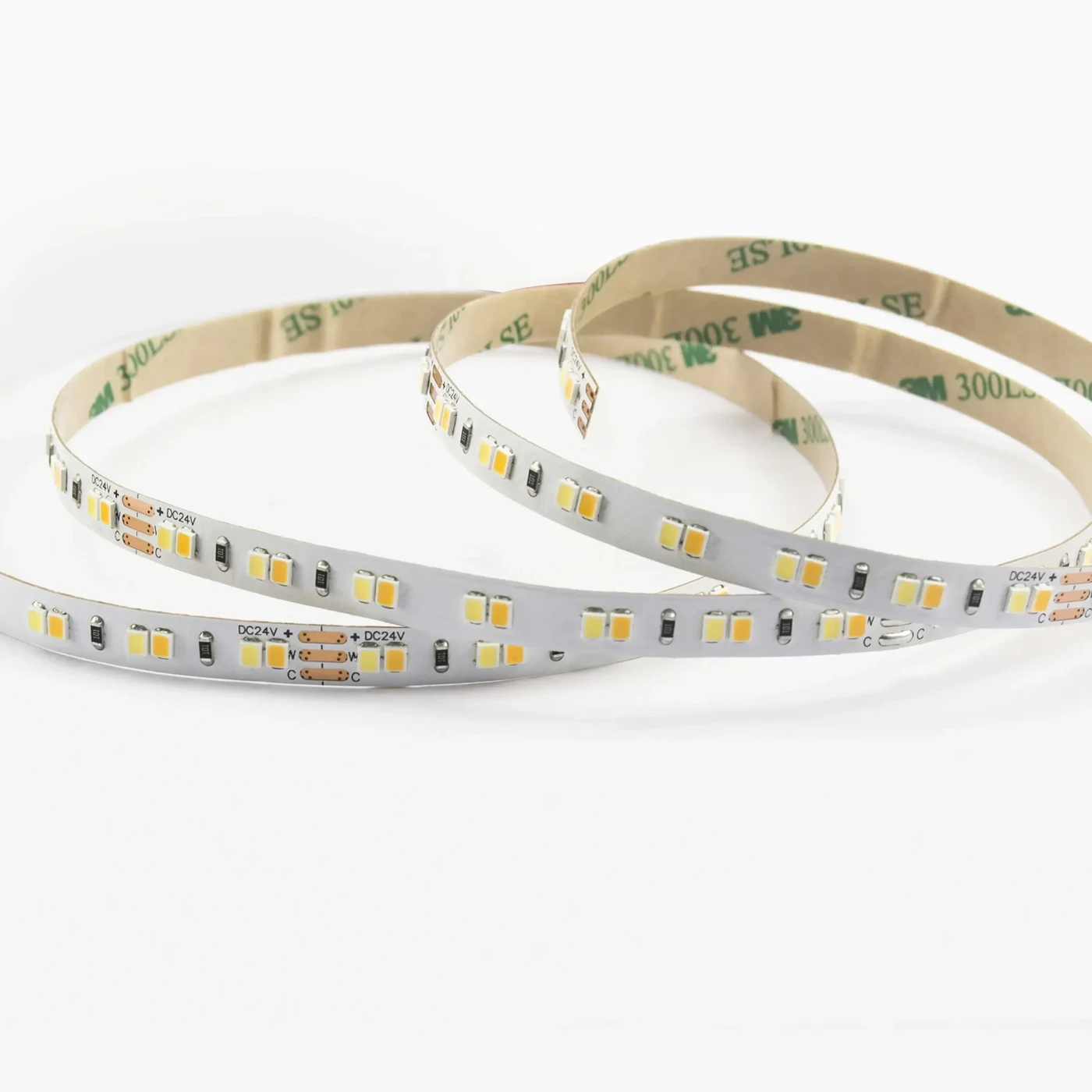
Inspect the actual light-source construction
A close view of an LED strip helps distinguish the board, packages and electrical sections. Use the selected model drawing for its dimensions and cutting interval.
A source that fits the finished detail.
Compare the light line, assembly envelope and control requirements together. The routes below are starting points for a specification discussion.
Catalogue reference SR005-140P2835IP20TW; final configuration requires review.
For merchandise-focused comparisons in a controlled case assembly
Consider SMD candidates using exact model reports and a representative merchandise set. Evaluate them with the selected cover or optics so the comparison accounts for the case assembly that will be supplied, including glass and finishes.
An LED package number or general rendering index does not predict the preferred appearance of every metal or stone in a showcase.
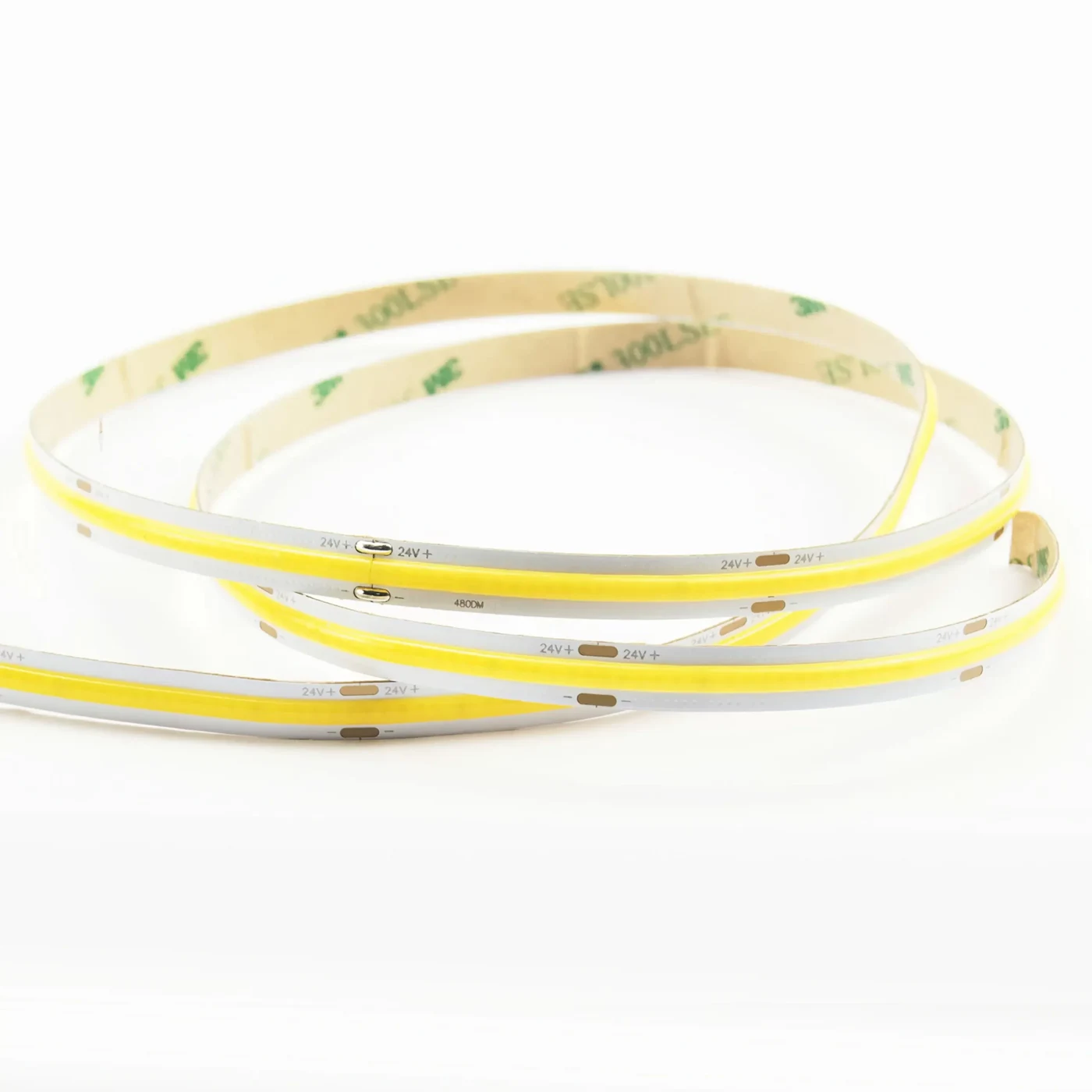
Catalogue reference SR005-320PCOBIP20; final configuration requires review.
For shallow visible details requiring a close-viewed line
Consider COB where compact framing makes source images difficult to conceal. Compare its effect on the merchandise and reflected light lines in the finished case rather than assuming that a continuous emitter is the preferred presentation.
Check exact spectral and colour data alongside the sample. Construction type alone does not establish colour quality or a particular sparkle effect.
Use the fixture drawing, component documentation and a representative assembly to turn the visual brief into a repeatable specification.
01
Build a representative sample set
Ask the retailer to select the metal finishes, stones, packaging and background materials that matter to the display. Record which combinations need approval and who has authority to approve them. Avoid making one sample ring stand for the entire product range. This is a proposed evaluation method, not a claimed BEXLIGHT jewellery project.
02
Keep source data and appearance connected
Request the spectral and colour-rendering information for the exact candidate configuration. Keep report identity attached to the sample. Evaluate the merchandise under a controlled scene, then under the intended surrounding store light. Do not describe a source as universally best for diamonds, gold or gems without a defined comparison and evidence.
03
Inspect the glazed case
Observe the display from the intended customer positions with the installed glass, backing and interior finishes. Identify direct and reflected views of the source. Adjust mounting geometry and shielding in the mock-up before specifying a different power level. Keep the result separate from the merchandise colour judgement.
04
Approve the service and supply configuration
Record active section lengths, profile or mounting components, lead exits and equipment access. Define how a failed section can be replaced without disturbing the merchandise structure. For repeat cases, preserve the approved sample identity and request matching evidence for subsequent supply rather than relying on a generic colour label.
From an initial brief to a controlled assembly.
Provide case drawings, glazing details, representative merchandise and the approval scene. Include case quantities and whether the source is supplied as reels or assembled sections. No specific rendering result is promised before the relevant data and sample are reviewed.
Decision
What to check
Record or boundary
Colour presentation
Retailer-selected merchandise set
Signed visual comparison
Reflected glare
Installed glazing and customer eye positions
Case mock-up
Repeatability
Exact source and assembly identity
Controlled case specification
Showcase section and glazing
Representative merchandise categories
Backdrop and interior finishes
Lighting position and circuit plan
Retailer approval responsibility
FREQUENTLY ASKED QUESTIONS
Application FAQ
Selection, integration and repeat-supply questions for this application.
01Should gold, silver and coloured stones use the same lighting configuration?
That is a merchandise approval decision rather than a rule based on the source family. Compare representative pieces with the retailer under the intended case scene and surrounding store light. Record whether one configuration is accepted for the whole range or whether named display categories require separate cases or controlled lighting zones.
02How can two suppliers’ jewellery samples be compared fairly?
For a jewellery lighting comparison, use the same merchandise arrangement, glass, background and viewing conditions, and identify each sample configuration. Record any differences in operating input or optics rather than hiding them in the comparison. Review the associated reports for sample identity, then let the authorised retailer representative assess the merchandise presentation under the agreed conditions.
03What if the case frame is too narrow for the preferred lighting assembly?
Review the complete mounting and termination envelope with the case designer before changing the source. Possible changes to the frame, optical detail or section layout should be evaluated as new assemblies. A source that fits inside the opening may still leave no practical space for its connection or replacement after the glass is installed.
04How do we retain the approved appearance for additional showcases?
Keep the source configuration, optics, finishes and accepted merchandise scene together in the jewellery display case specification. Ask for traceable supply references and an agreed approach to reviewing later changes. Where cases will sit adjacent to earlier units, include a comparison procedure that reflects that installation rather than relying only on matching catalogue descriptions.
Share the fixture or route drawing, quantities, target market and the decisions still open. Include your company and whether you are preparing a sample, a project or repeat production.